Bond-line structure
Simplifying representations
Organic molecules get big quickly, so we strip out everything the reader can infer and keep only connectivity and functional groups. Learning to read what is not drawn — the carbons at the vertices, the hydrogens that fill their valences — is the first real skill of the course.
Simplifying representations
What a skeletal structure shows and hides
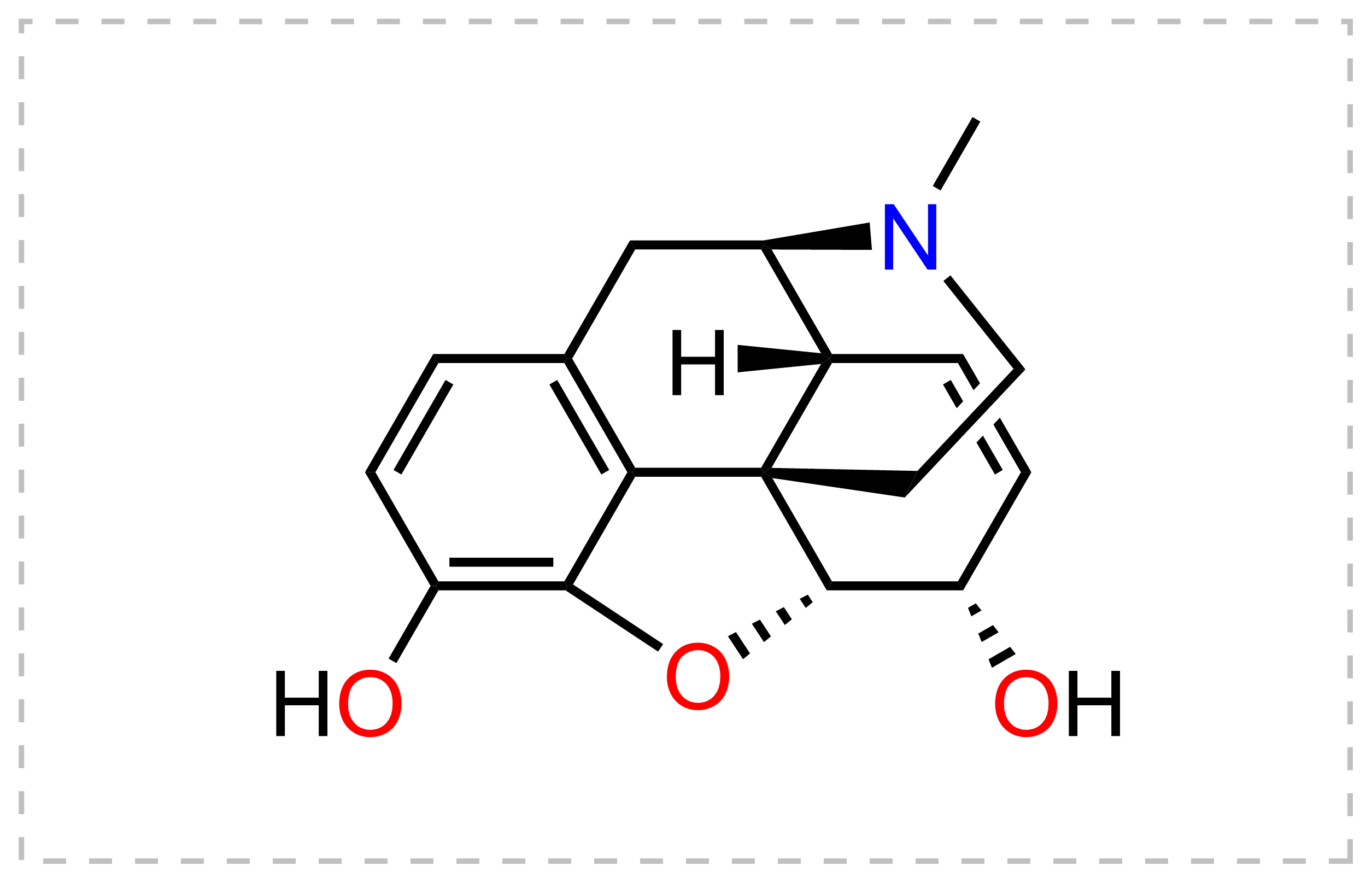
Bond-line structures, also called skeletal structures, are simplified representations of organic molecules commonly used in chemistry. In these diagrams, carbon atoms are implied at the ends and intersections of lines, while hydrogen atoms bonded to carbon are omitted for clarity. Each line represents a covalent bond, and multiple lines indicate double or triple bonds.
Heteroatoms — oxygen, nitrogen, the halogens — and their attached hydrogens are shown explicitly. This notation provides a clear and efficient way to depict complex molecules, emphasizing connectivity and functional groups without clutter. Bond-line structures are widely used in organic chemistry for quick visualization; the C-1 through C-5 alkanes are shown here.

Leaving out the hydrogens
Omitted, but never forgotten
Organic molecules get big pretty quickly, so it benefits us to strip out information when possible. In bond-line structures this means not including hydrogen atoms — but remembering they are there when we consider the molecule's potential reactivity. Every carbon still carries whatever hydrogens it needs to reach four bonds, and those hydrogens are what a base removes or a radical abstracts later on.

From alkanes to lines
Reading a single line as ethane
We learn how to strip out unneeded information early on, so that most structures are drawn with just lines. Beginning with the alkanes, we find that ethane becomes just a line — however, when reading that line we must recall two attached methyl groups. The line is the C–C bond; each end is a carbon with three hydrogens on it.

Branches and the four-bond limit
Working out the connections
When branches are involved, we remember that carbon can only have four bonds at most, and that any C atom with five bonds is incorrect. Here the connections between C atoms need to be worked out and reduced to single lines — trace the longest chain first, then hang the branches off the vertices they belong to.

Check your bond count
Where the simple mistakes happen
While this idea is fairly simple, it is easy to make mistakes by not paying attention to the number of bonds to carbon. Check those bonds once you have drawn a structure and avoid having too many bonds to any one carbon atom. A vertex with five lines running into it is not an unusual molecule — it is a drawing error.

Avoid drawing the same molecule twice
Two tests for duplicates
Also, be careful when drawing structures so you don't repeat. The following examples highlight this. If a drawing is the same when rotated through a plane, or it has the same name when you apply nomenclature rules, it is the same molecule — no matter how different the two sketches look on the page.

Reference
Reading a bond-line structure
What each mark on the page means, and what you are expected to supply from memory.
Self-check
Six questions before you move on
Work out an answer on paper, then reveal to check. If your reason is right but the answer is wrong, you are closer than you think.
A zig-zag drawing has four line segments end to end. How many carbons, and how many hydrogens?
Five carbons, two ends and three vertices, so pentane, C5H12: two CH3 plus three CH2.
Why are the hydrogens on an oxygen written out when the ones on carbon are not?
Carbon's hydrogen count is fixed by its four-bond valence, so it can be inferred. Heteroatoms may or may not carry hydrogen, and that hydrogen is often the reactive site, so it is shown.
A single line means ethane, not methane. Why can a bond-line drawing not show methane at all?
The notation draws bonds between carbons, and methane has none. It has to be written as CH4.
You draw a vertex with four lines meeting at it. How many hydrogens does that carbon carry, and is the drawing legal?
None, and it is legal since it is a quaternary carbon. Four bonds is the limit; a fifth line would make it wrong.
Two sketches of C5H12 look different on the page. What two tests tell you whether they are the same molecule?
Rotate or flip one drawing and see if it matches the other, or name both by the nomenclature rules. Same name means same molecule.
If hydrogens are left out of the drawing, why do they still matter when you reason about reactivity?
They are the atoms a base removes, a radical abstracts, and an elimination needs on the neighbouring carbon. Omitting them from the page does not remove them from the molecule.