Alkane nomenclature
Naming the skeleton
Every organic name is built the same way; substituents, then the parent chain, then the family ending. Alkanes are where you learn the basics, because there is no functional group to take into account. Get the parent chain and the numbering right here and the rules carry through every chapter that follows.
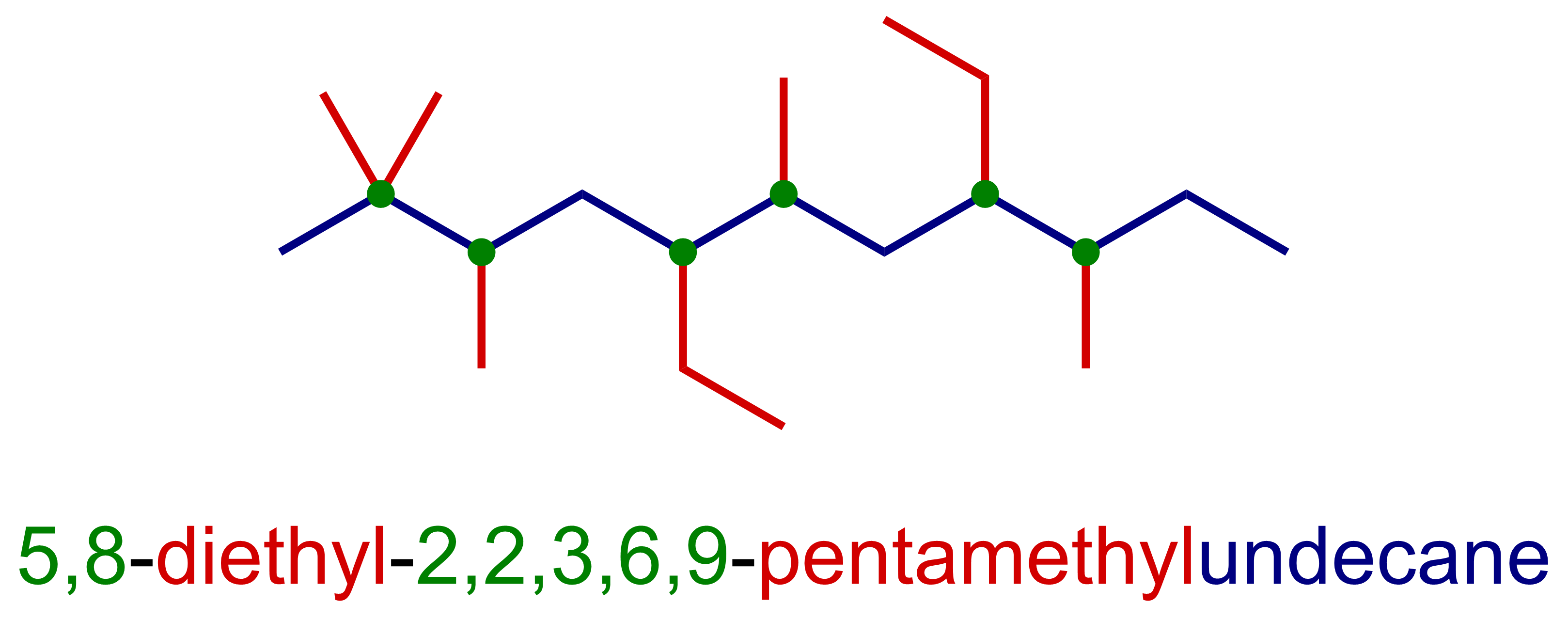
Building a name
Prefix, parent, suffix
An IUPAC name is definitive information about a structure, read in three sections. The parent is the root that tells you how many carbons are in the main chain; meth, eth, prop, but, pent, and so on. The suffix names the family; for alkanes it is always -ane, because every carbon is saturated and there is no higher-priority group to deal with. The prefixes are the substituents attached to that chain, each carrying a number that says where it is located.
So 4-ethyl-2,3-dimethylheptane, for example, translates as a seven-carbon parent chain (heptane) with an ethyl group on carbon 4 and methyl groups on carbons 2 and 3. Nothing else is needed in the name to define that molecule and no functional groups need be included. Every hyphen, comma, and number is key, and a name that omits a locant or uses the wrong parent describes a different compound. Being exact with names for organic compounds is extremely important, especially in laboratory or in-the-field settings.
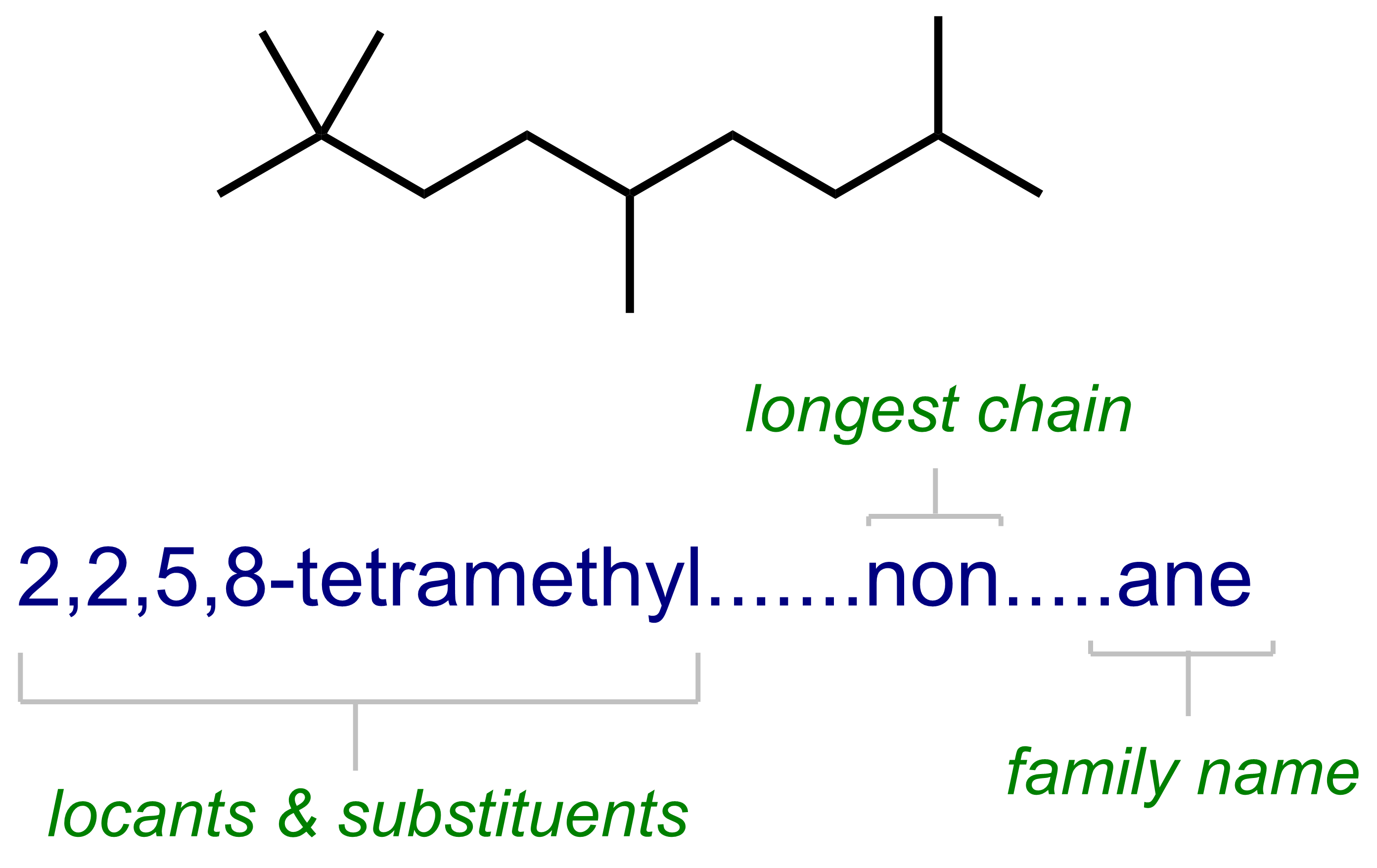
Find the parent chain
Longest continuous chain wins
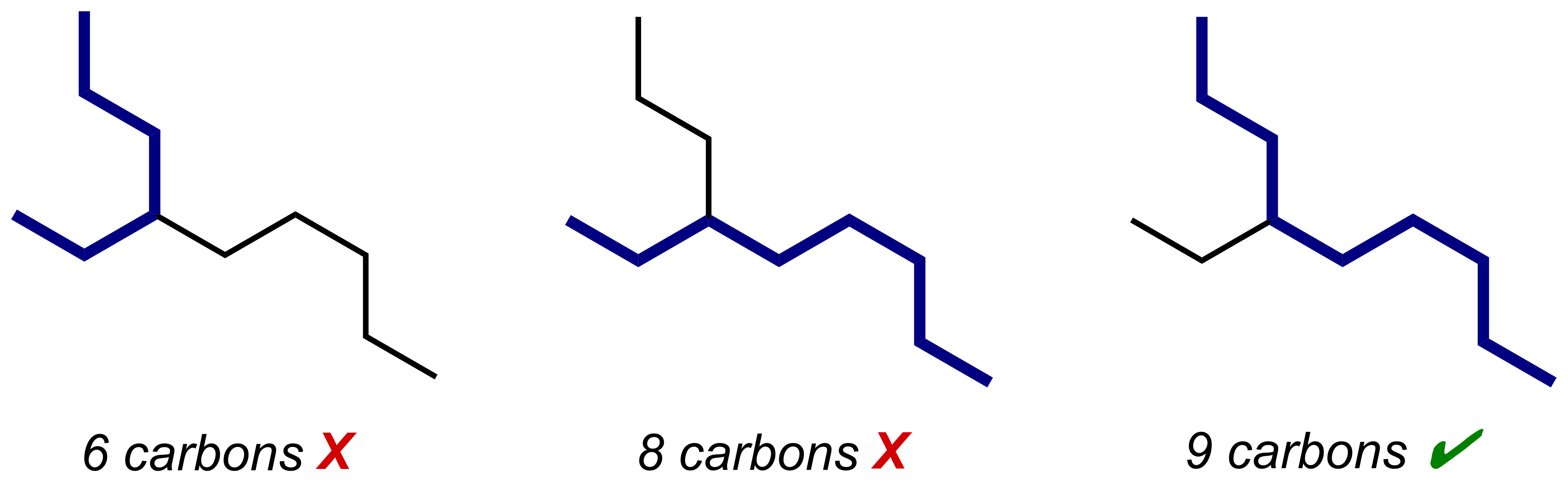
Start by finding the longest continuous chain of carbons. Continuous does not mean drawn in a straight line; the chain is free to turn corners, and the longest path through a branched skeleton is often the one that looks least like a chain on paper. Count every candidate path, not just the horizontal one. Students lose more points here than anywhere else on nomenclature questions.
When two chains are tied for length, choose the one with the greater number of substituents. That rule sounds backwards, it produces a busier name, but it keeps the parent chain as the structural backbone and pushes complexity into the prefixes, where it can be described precisely. Once the parent is chosen, everything not part of it is a substituent, and the ends of the chain define the only two directions you are allowed to number from.
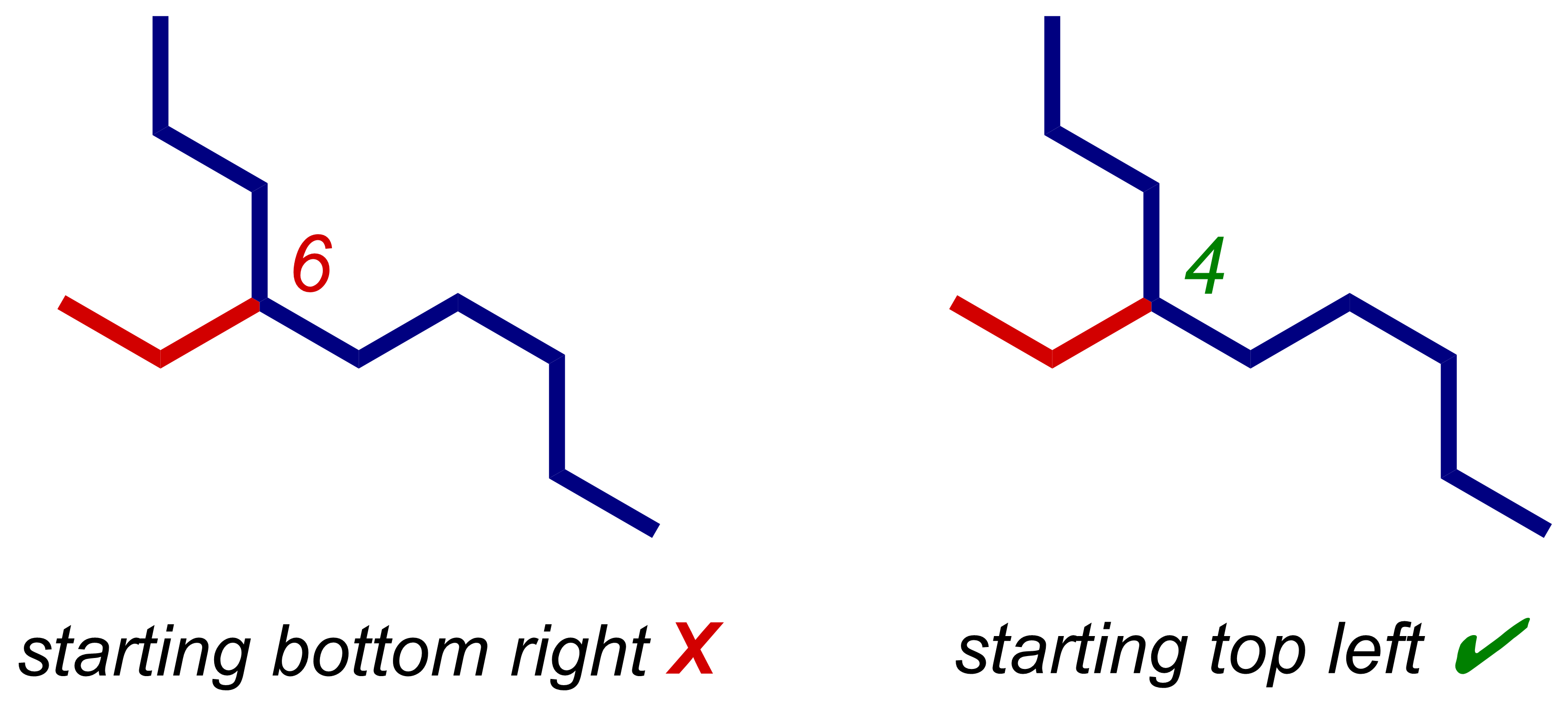
Number the chain
Lowest locants, first point of difference
Number from the end of the longest chain that reaches the first substituent sooner. If both ends tie at the first substituent, compare the second substituent, then the third, and so on; the correct direction is the one that gives the lower number at the first point of difference. Compare the locants individually rather than adding them up: 2,3,6 beats 2,4,5 even though the sums are equal, because 3 is lower than 4 at the first place they differ.
If the two directions produce genuinely identical locant sets, the tie is broken alphabetically; the substituent that comes first in the name gets the lower number. Every substituent needs its own locant, even when two of them sit on the same carbon, which is why you see names such as 2,2-dimethylbutane rather than 2-dimethylbutane.
Assemble the substituents
Alphabetical order and the multiplier prefixes
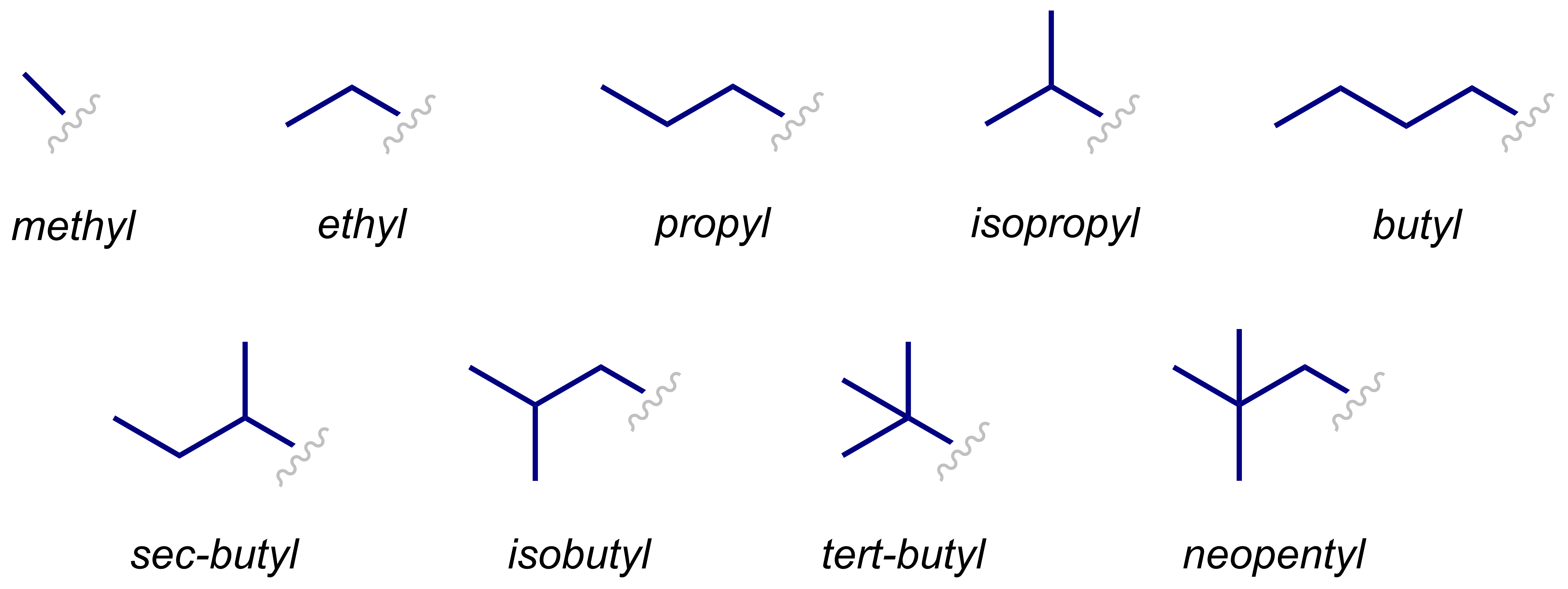
Substituents are listed alphabetically, each with its locant, connected by hyphens. Repeats are collected with di-, tri-, tetra- prefixes, and their locants are separated by commas. The multiplier is never considered part of the alphabetizing; dimethyl goes under m, so ethyl still precedes dimethyl. Structural prefixes that are part of the substituent's own name and are not hyphenated, such as iso in isopropyl and neo in neopentyl, do count, so isopropyl is listed under i.
The italicized locational tags sec- and tert- are ignored, so tert-butyl alphabetizes using b. Punctuation follows one form; numbers are separated from words by hyphens and from other numbers by commas, and the final substituent attaches straight to the parent with no space. Written out, that gives 4-ethyl-2,3-dimethylheptane as a an acceptable name in the correct format.
Rings
Cycloalkanes and which piece is the parent
A ring takes the prefix cyclo- on the alkane root; cyclohexane, cyclopentane, cyclopropane. With one substituent no locant is needed, because every ring carbon is equivalent until something is attached; methylcyclohexane doesn't need a number. With two or more substituents, the ring is numbered to give the lowest locants, starting at a substituted carbon and going around the cycle to keep the numbers small.
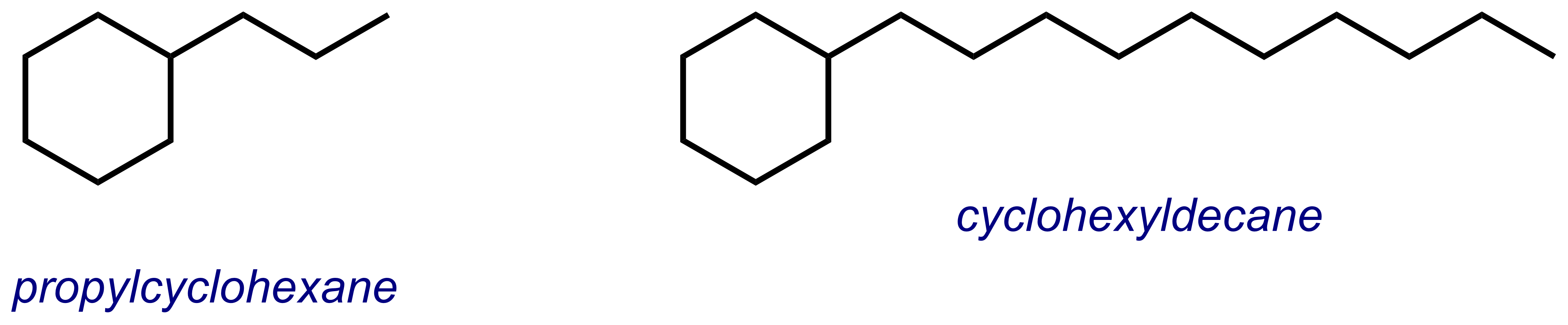
When a ring and a chain are both present, the parent is generally whichever has more carbons. A cyclohexane ring bearing a propyl group is propylcyclohexane; the same ring on a decane chain is cyclohexyldecane, with the ring demoted to a substituent. Count both pieces before you commit, and remember that a ring drawn on the page is not automatically the parent.
A worked name
Four steps, in order, every time
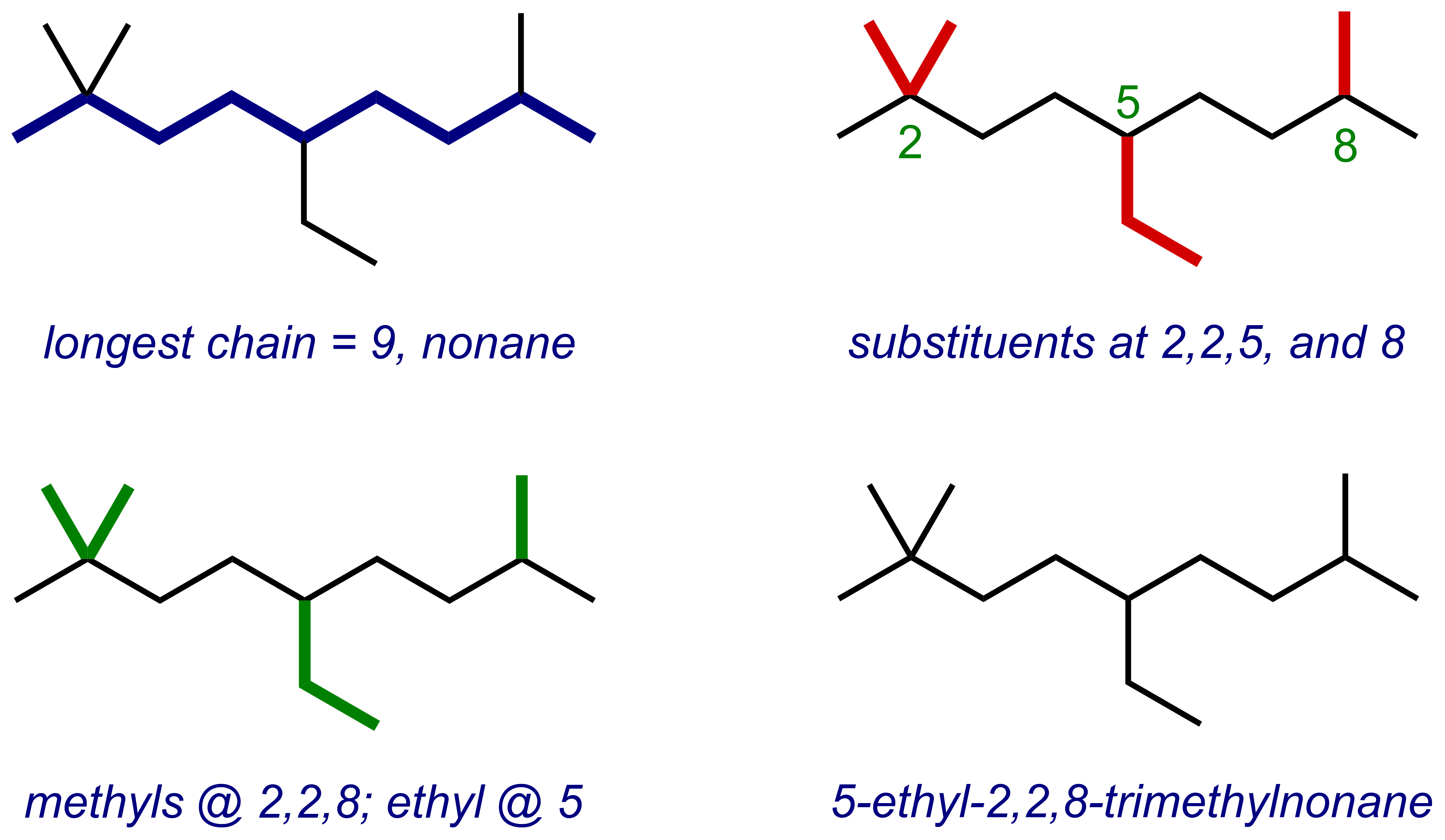
Apply the same four steps in the same order and nomenclature becomes systematic. Find the longest chain and name the parent. Number from the end that reaches a substituent first, using the first point of difference to break ties. Identify each substituent and its locant. Then write the name alphabetically, collecting repeat substituents with multiplier prefixes and punctuating with hyphens and commas.
Working backwards is the best test of the whole system. Read a name you have written, draw the structure it describes without looking at the original, and compare. If the two drawings differ, the name is wrong, and the step that failed is often the parent chain or the direction of numbering rather than the spelling.
Reference
Roots, formulae, and substituent names
The first twelve roots cover almost everything you will be asked to name. The substituent column is the same root with -yl in place of -ane.
Self-check
Six questions before you move on
Work out an answer on paper, then reveal to check. If your reason is right but the answer is wrong, you are closer than you think.
Two chains in a skeleton are both seven carbons long. How do you choose the parent?
Take the chain with more substituents on it. The extra branches then get described precisely with prefixes instead of being lost inside the longest chain name.
Numbering one way gives (2,4,5) and the other gives (2,3,6). Which is correct?
(2,3,6). Compare locant by locant: they tie at 2, and 3 beats 4 at the first point of difference.
In a name carrying both an ethyl and two methyls, which substituent is written first?
Ethyl. The multiplier prefix di- is ignored when alphabetizing, so dimethyl uses m and e comes before that.
Why is 2-dimethylbutane not a valid name?
Every substituent needs its own locant, even when they share a carbon. The correct name is 2,2-dimethylbutane.
A cyclohexane ring carries a decyl chain. Which piece is the parent, and what is the name?
The chain; ten carbons beats six, so the ring becomes a substituent and the preferred name is cyclohexyldecane.
Why doesn't methylcyclohexane need a locant, while a dimethylcyclohexane does?
Every carbon of an unsubstituted ring is equivalent, so the first substituent defines C1 by default. A second substituent can sit at 1,2 / 1,3 / 1,4, and those are different compounds, so the numbers are needed.