Organic mechanism videos
Every named mechanism from Organic 1 & 2, organized into 13 topics. Each reaction shown in order of the Klein text; click any reaction to watch the arrow-pushing mechanism video.
Substitution & Elimination
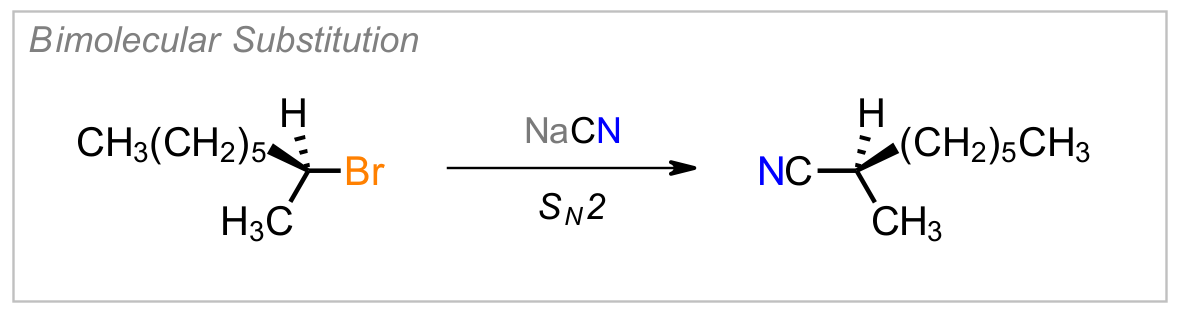
SN2 Inversion
Backside attack inverts the stereocenter in one step.
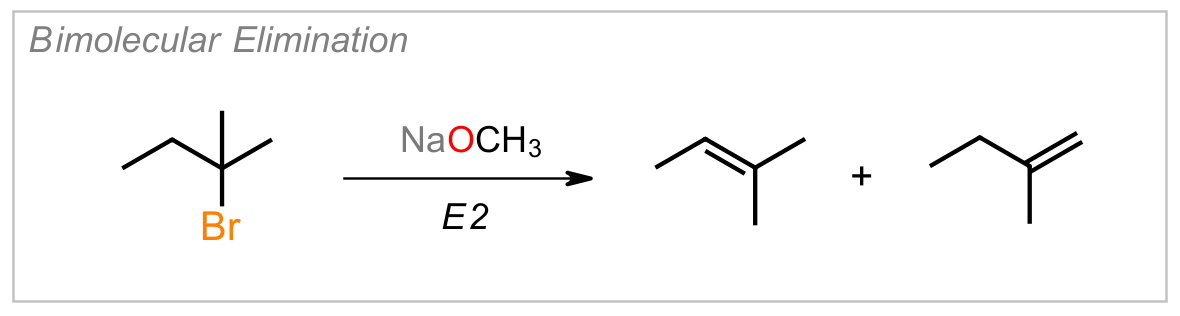
E2 of Alkyl Halides
Concerted anti-periplanar loss of H and X gives an alkene.
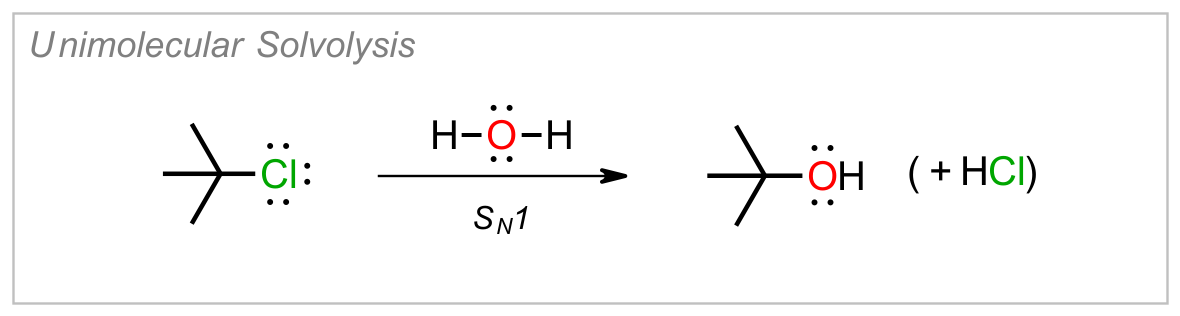
SN1 Solvolysis
The substrate ionizes to a carbocation, then solvent attacks.
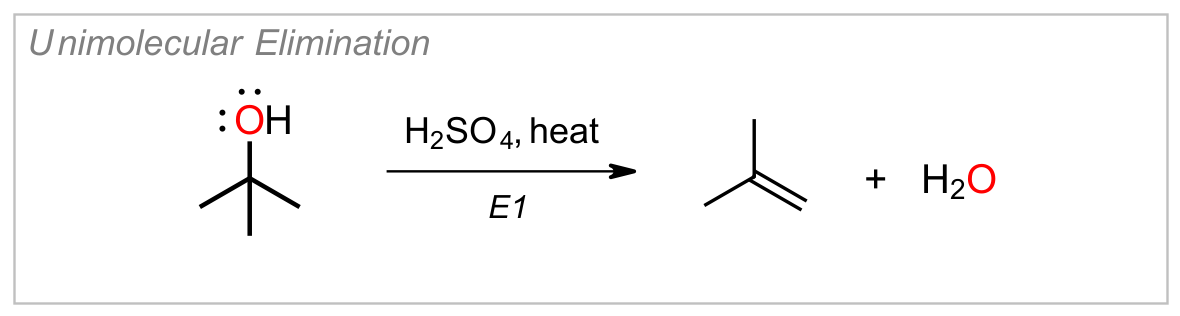
E1 Elimination
A carbocation forms, then loss of a beta-proton gives the alkene.
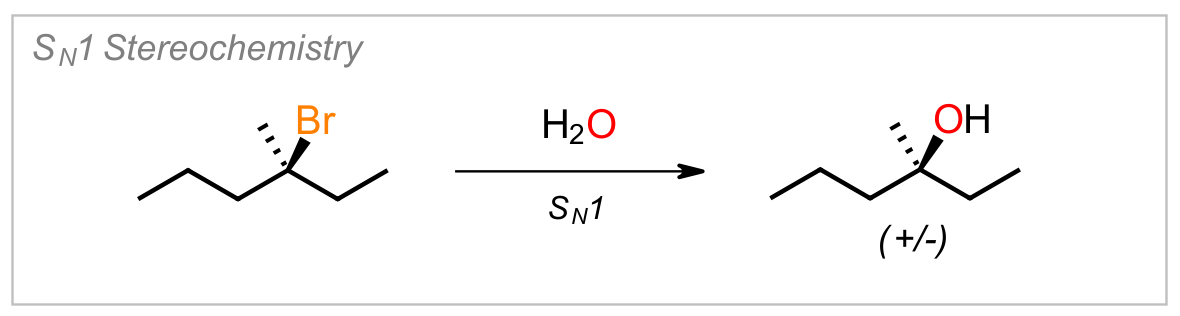
SN1 Stereochemistry
The planar cation is attacked from both faces, giving racemic product.
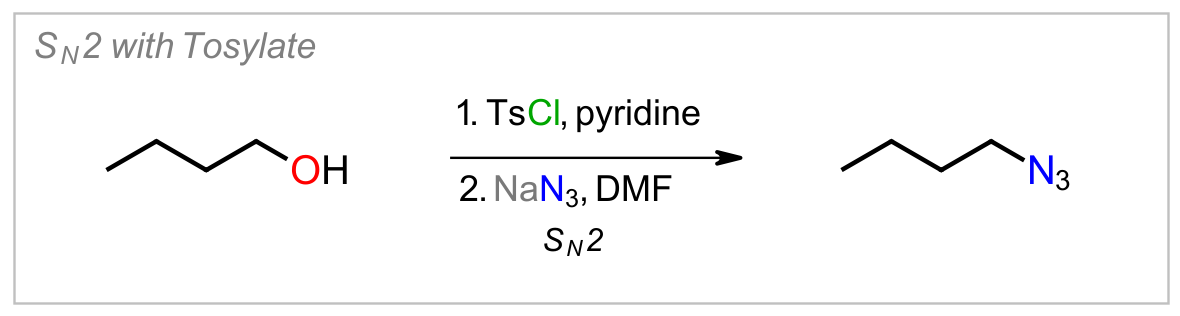
SN2 with Tosylate
A tosylate leaving group is displaced with inversion.
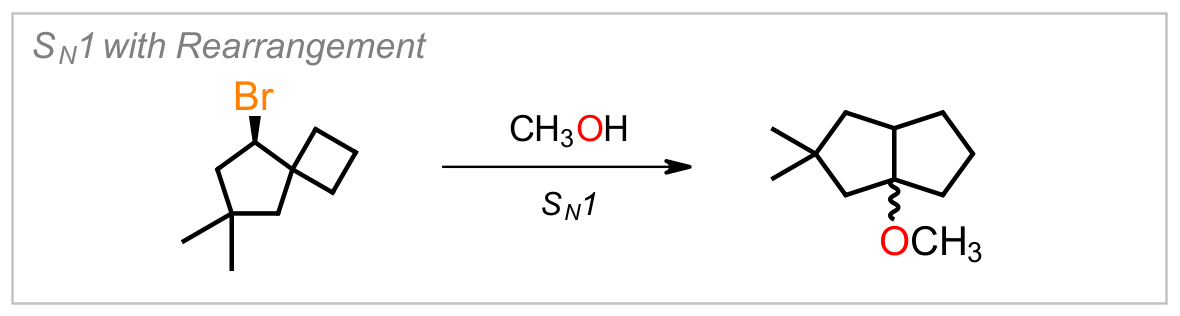
SN1 with Rearrangement
A hydride or alkyl shift builds a more stable cation.
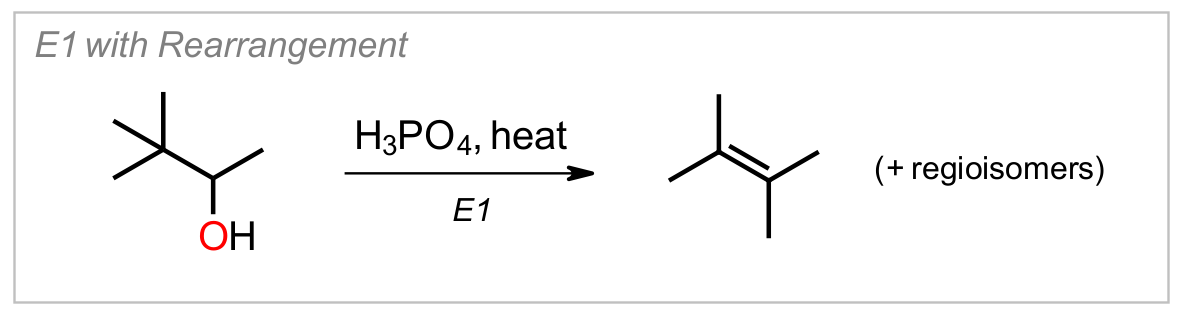
E1 with Rearrangement
The cation rearranges before eliminating to an alkene.
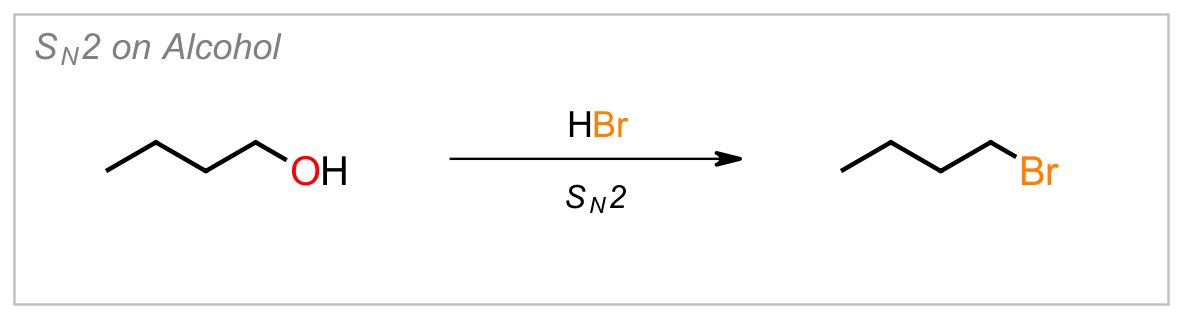
SN2 of Alcohols
A protonated alcohol is displaced by halide via SN2.
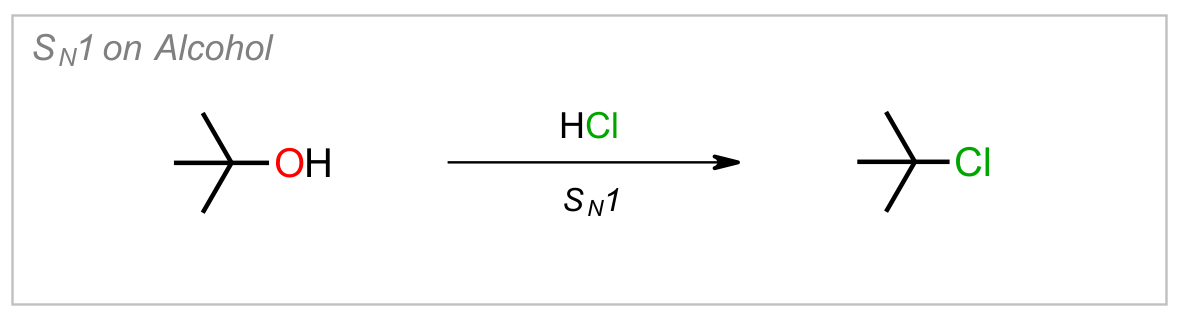
SN1 of Alcohols
A protonated alcohol ionizes, then halide traps the cation.
Addition to Alkenes
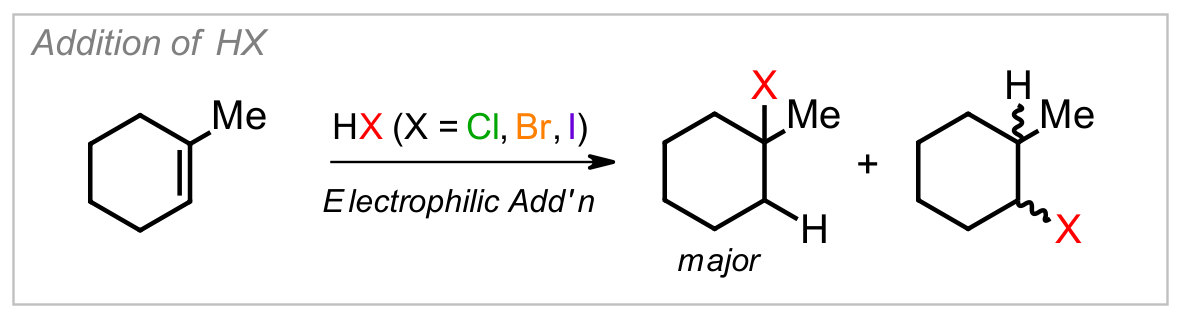
Addition of HX
Markovnikov addition of H and X across the double bond.
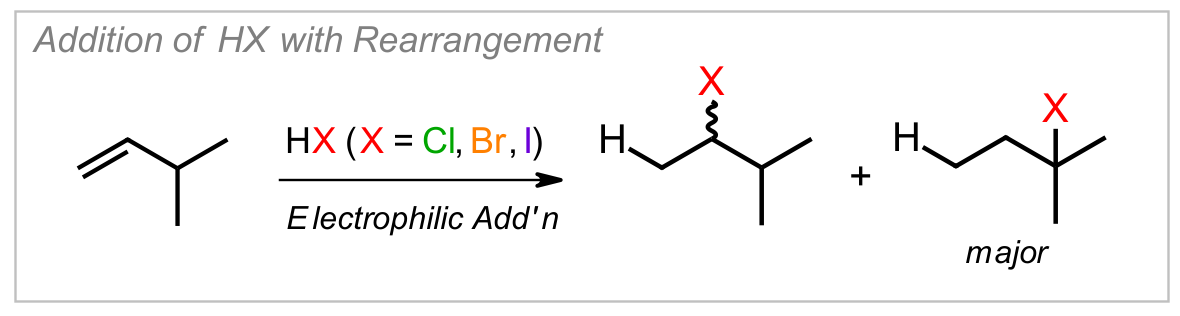
HX Addition with Rearrangement
The intermediate cation shifts before halide adds.
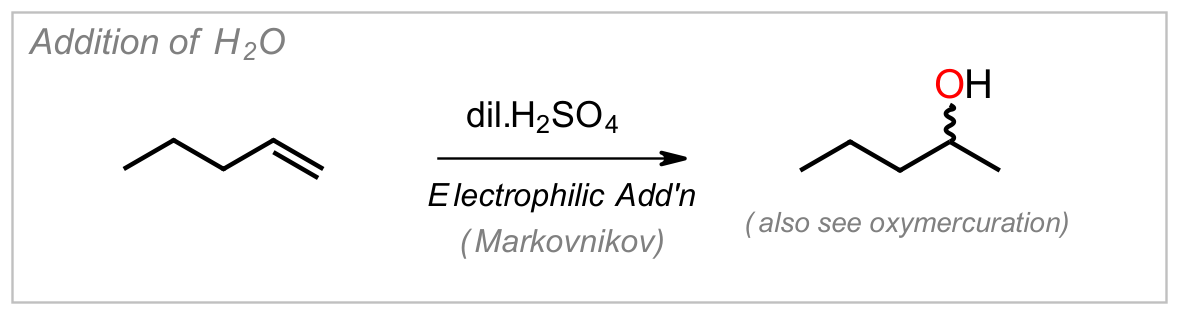
Acid-Catalyzed Hydration
Markovnikov addition of water through a carbocation.
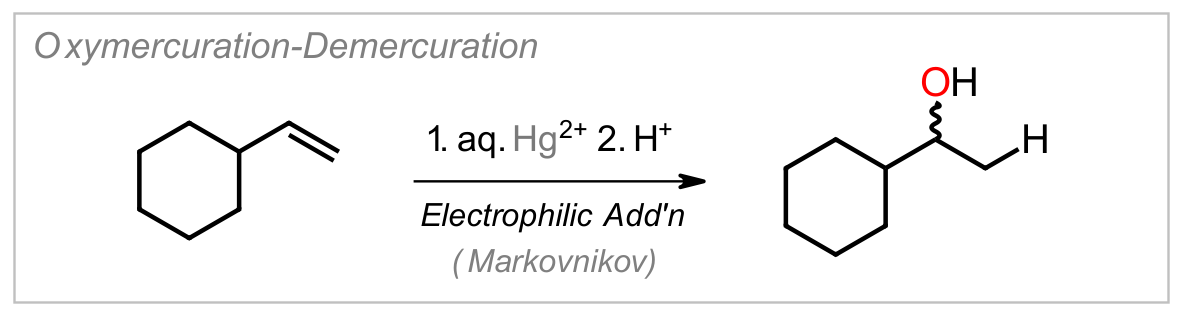
Oxymercuration
Markovnikov hydration with no rearrangement.
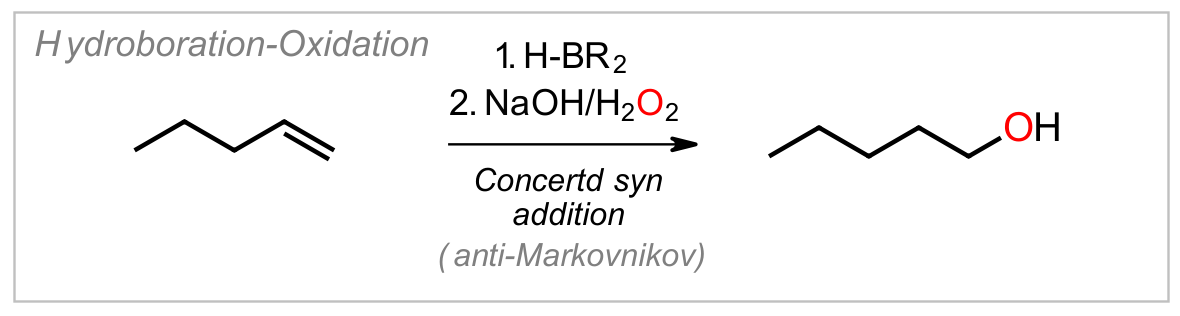
Hydroboration–Oxidation
Anti-Markovnikov, syn addition of water.
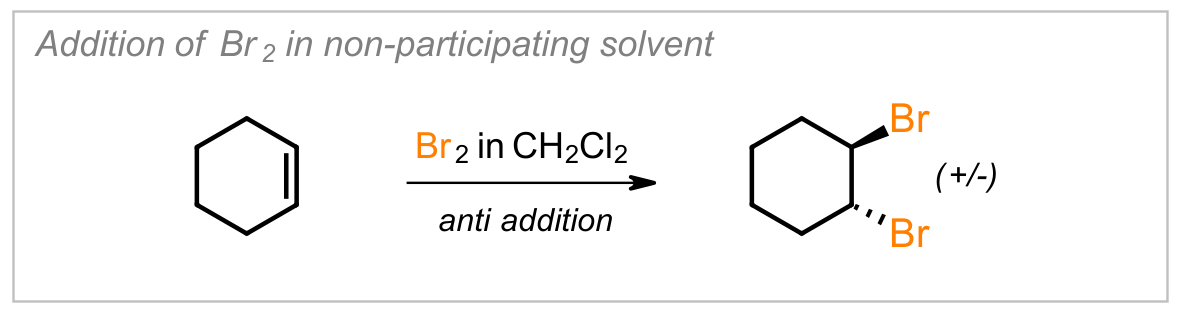
Bromine Addition
Anti addition of Br2 through a bromonium ion.
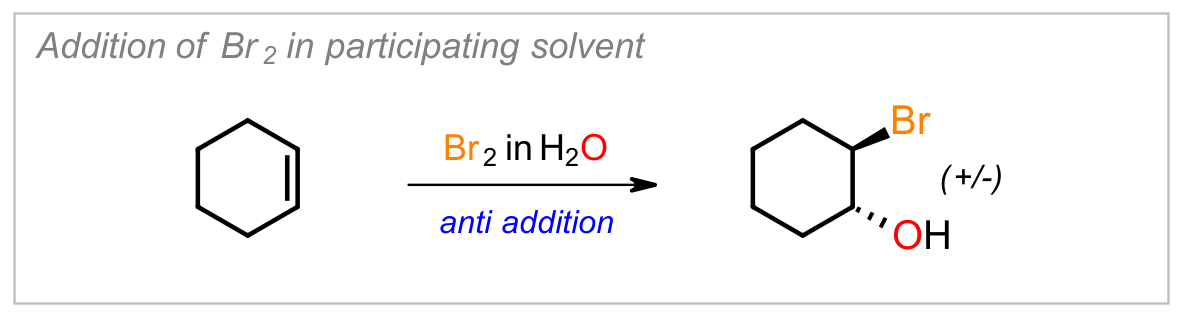
Halohydrin Formation
Br2 in water opens the bromonium to a halohydrin.
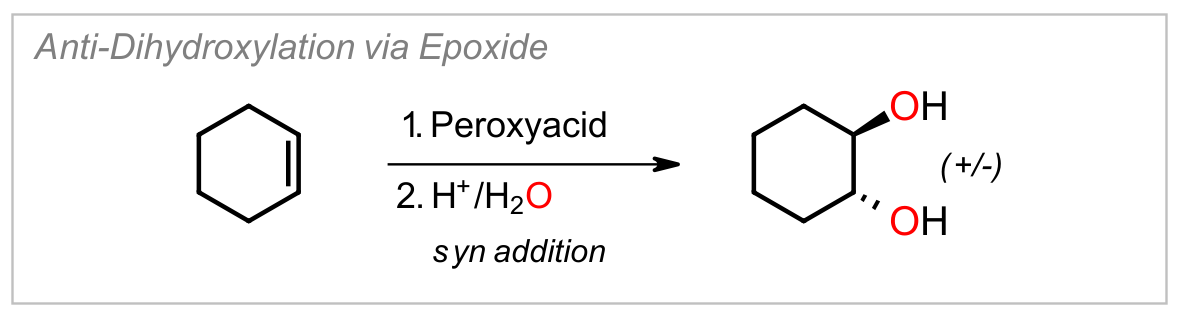
Anti Dihydroxylation
An epoxide is opened to give a trans-diol.
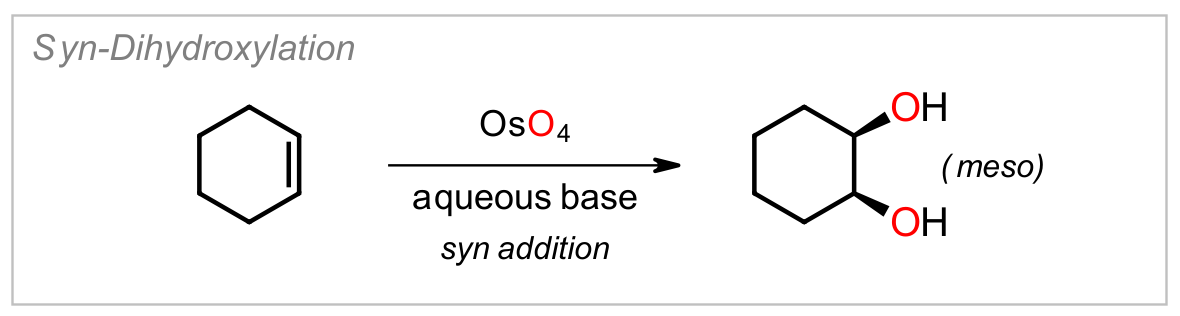
Syn Dihydroxylation
OsO4 adds two OH groups on the same face.
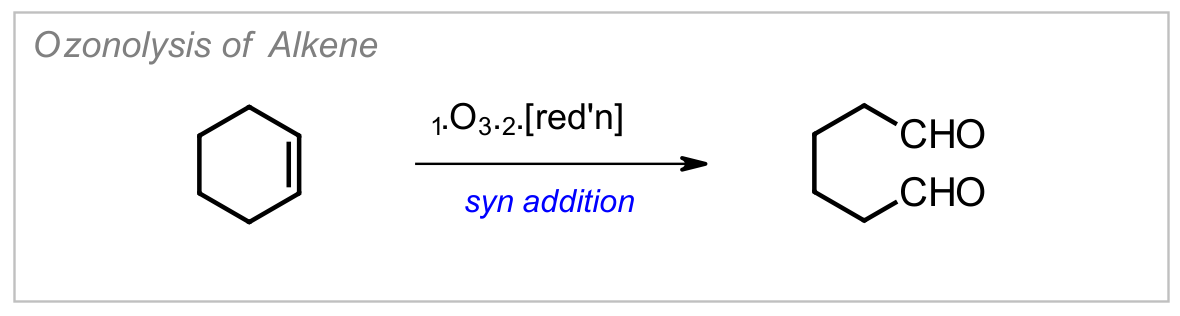
Ozonolysis
Ozone cleaves the alkene into two carbonyls.
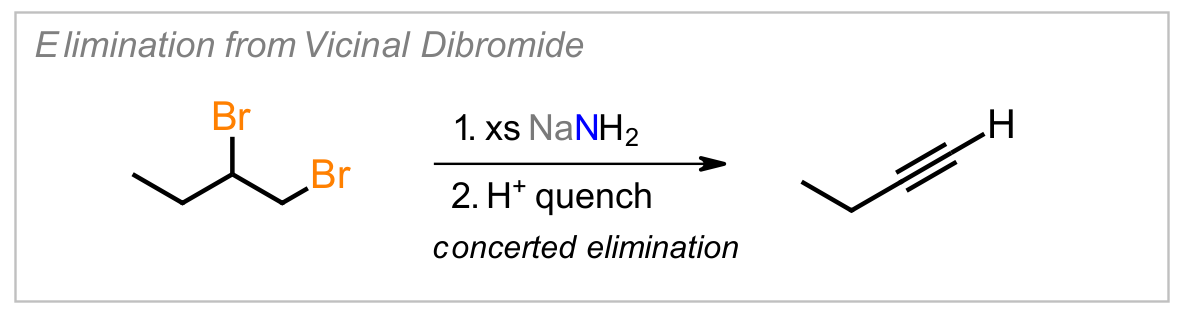
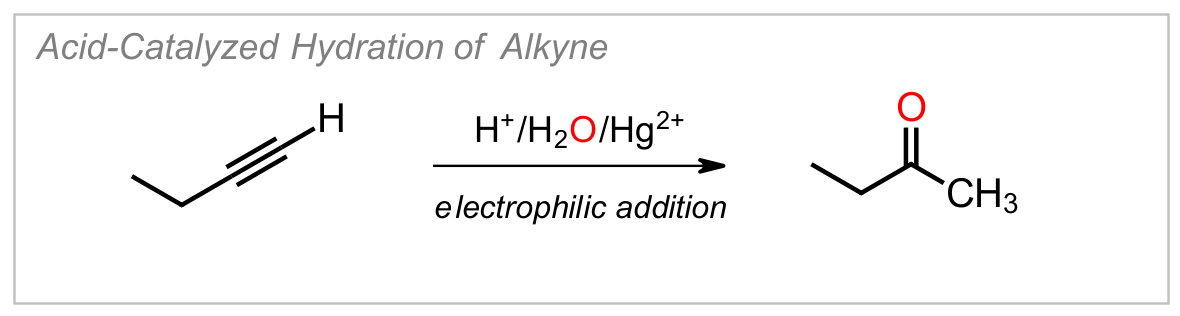
Alkyne Chemistry
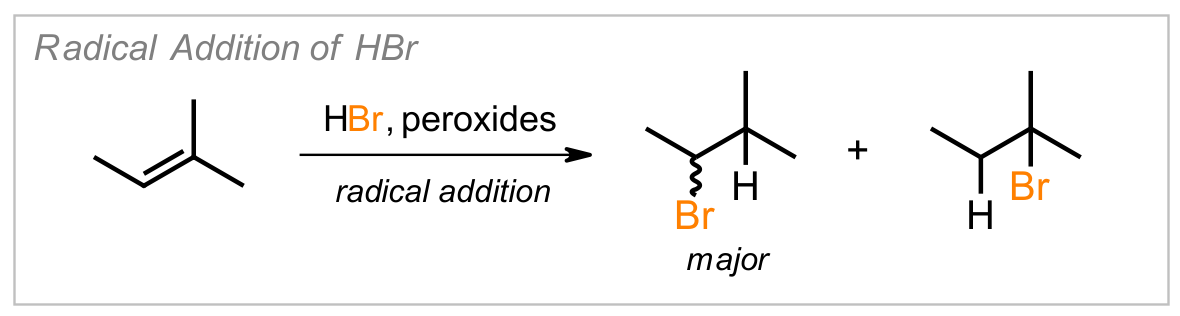
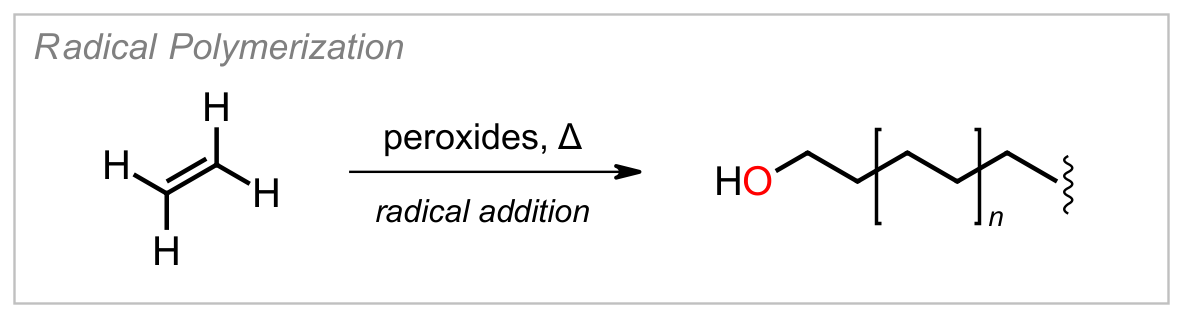
Radical Chemistry
Alcohols & Thiols
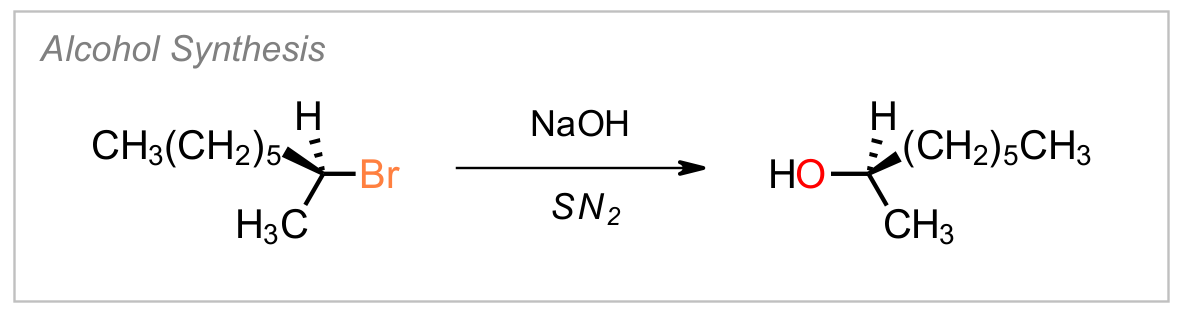
Alcohol via SN2
Hydroxide displaces a leaving group to give an alcohol.
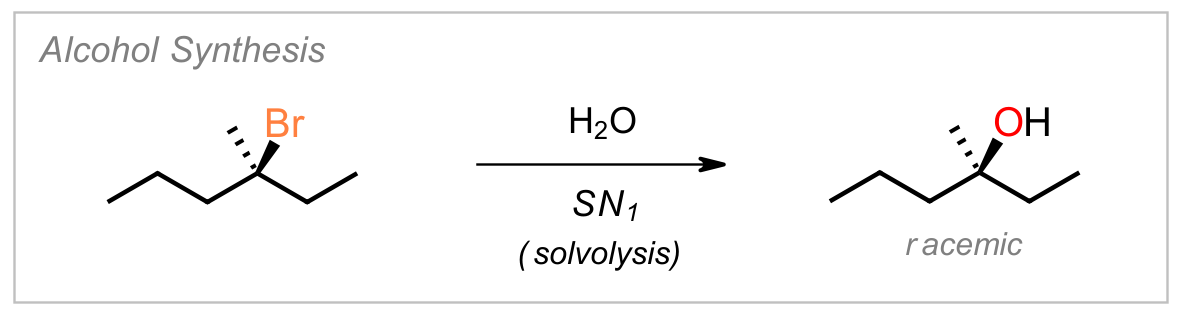
Alcohol via SN1
A carbocation is trapped by water.
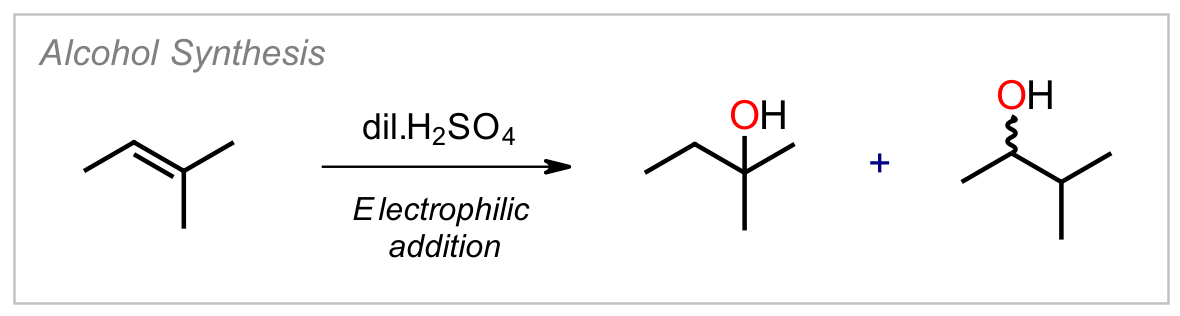
Alcohol via Alkene Hydration
Acid-catalyzed Markovnikov hydration of an alkene.
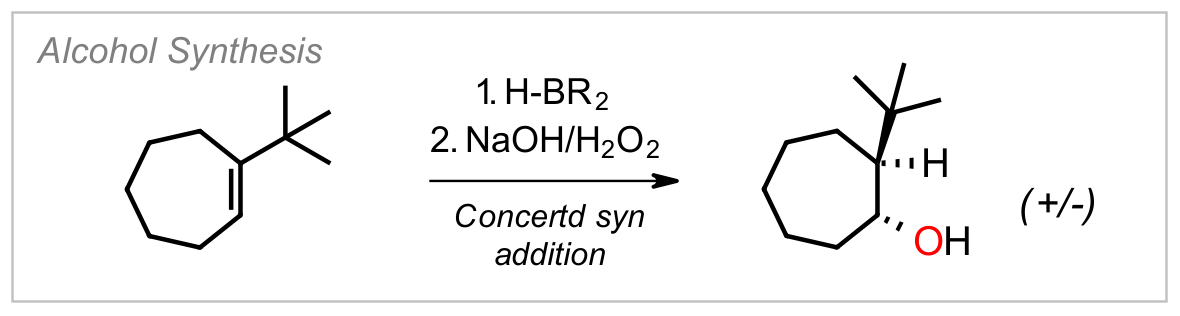
Alcohol via Hydroboration
Anti-Markovnikov alcohol from an alkene.
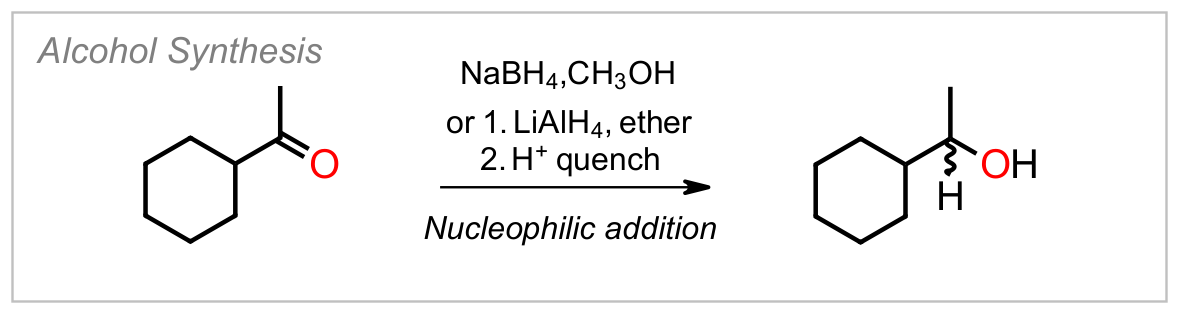
Hydride Reduction
NaBH4 reduces a carbonyl to an alcohol.
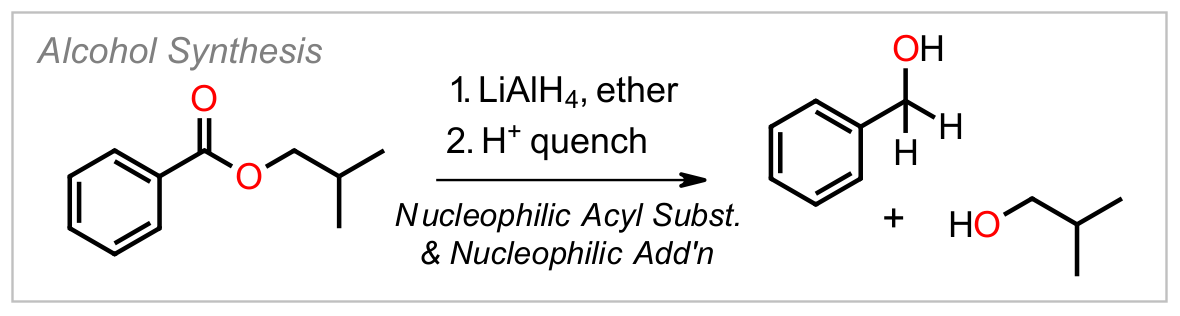
Ester Reduction (LAH)
LiAlH4 reduces an ester to a primary alcohol.
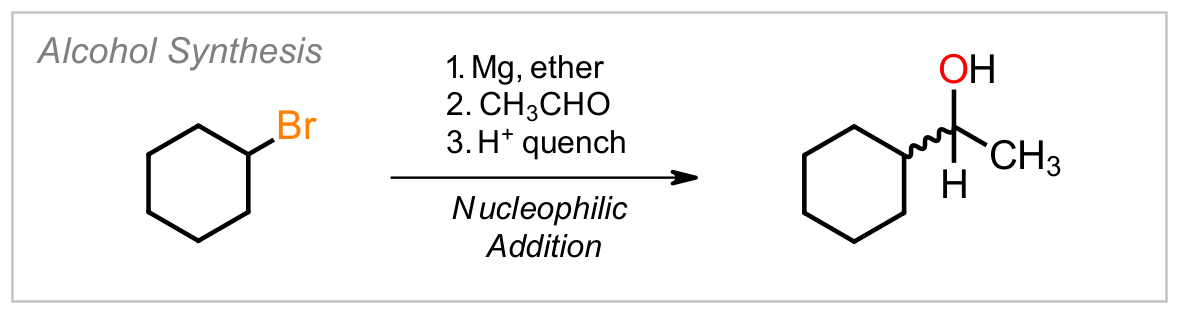
Grignard + Ketone
A Grignard reagent adds to give a tertiary alcohol.
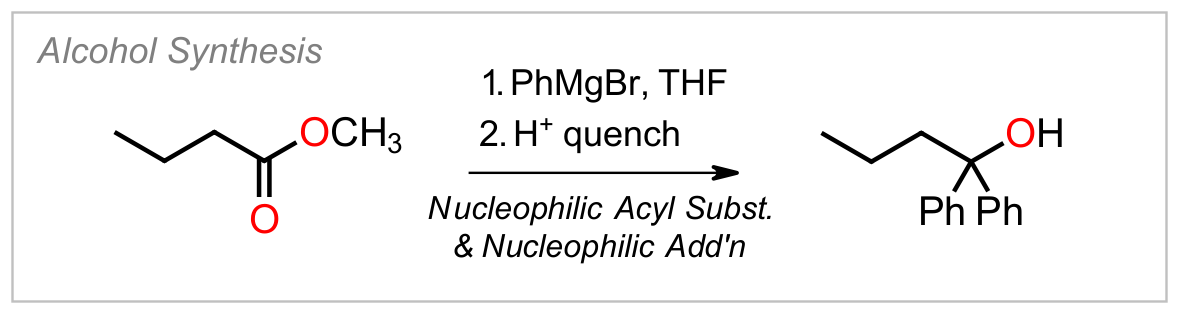
Grignard + Ester
Two equivalents of Grignard give a tertiary alcohol.
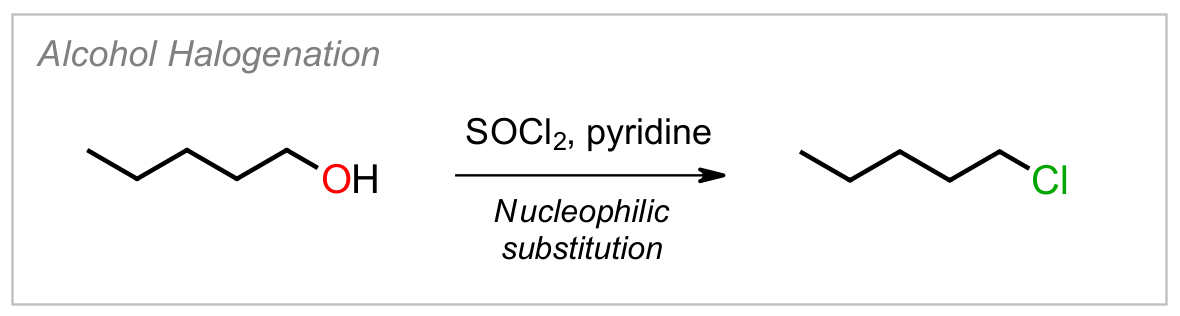
Alcohol + SOCl2
Converts an alcohol into an alkyl chloride.
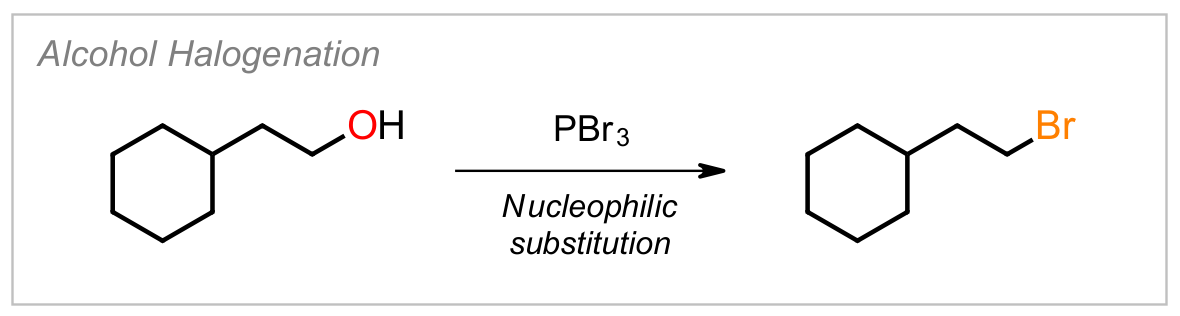
Alcohol + PBr3
Converts an alcohol into an alkyl bromide.
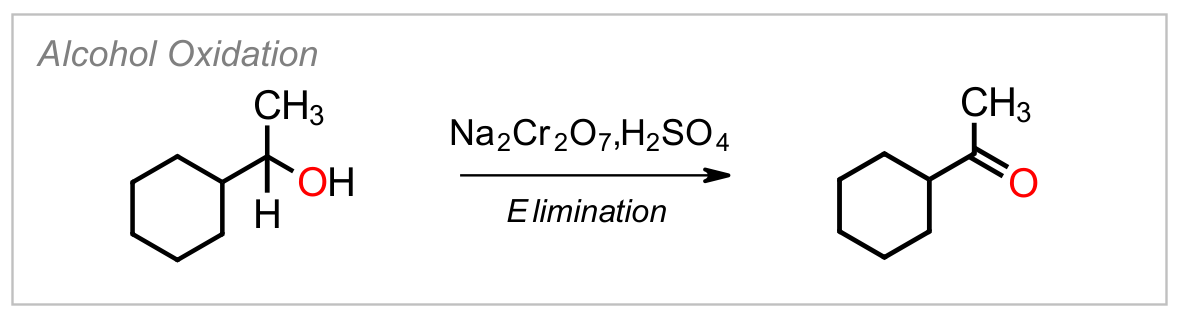
Secondary Alcohol Oxidation
Chromic acid oxidizes it to a ketone.
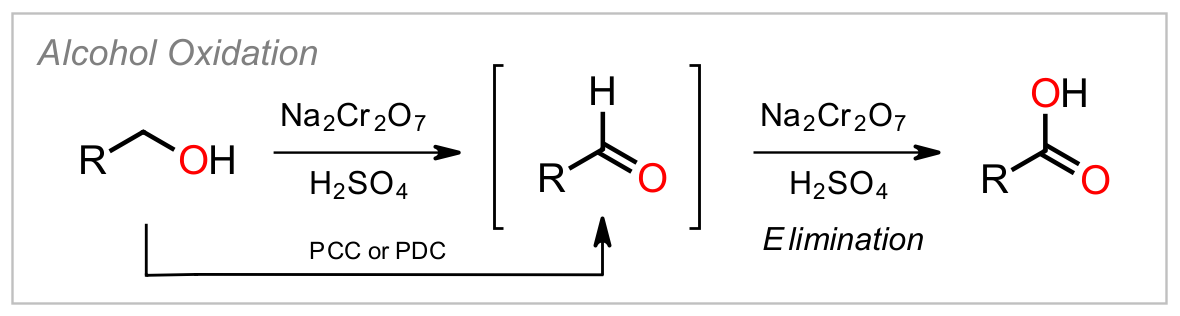
Primary Alcohol Oxidation
Chromic acid oxidizes it to a carboxylic acid.
Ethers, Epoxides & Sulfur
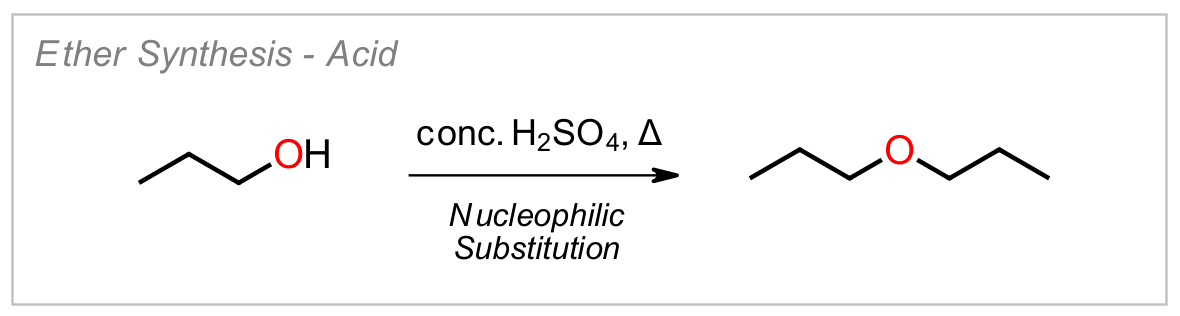
Acid-Catalyzed Ether Synthesis
Two alcohols condense to a symmetrical ether.
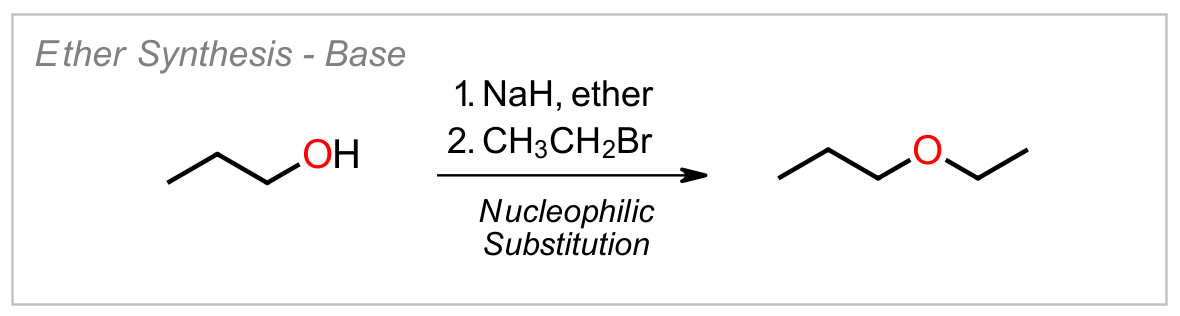
Williamson Ether Synthesis
An alkoxide does SN2 on an alkyl halide.
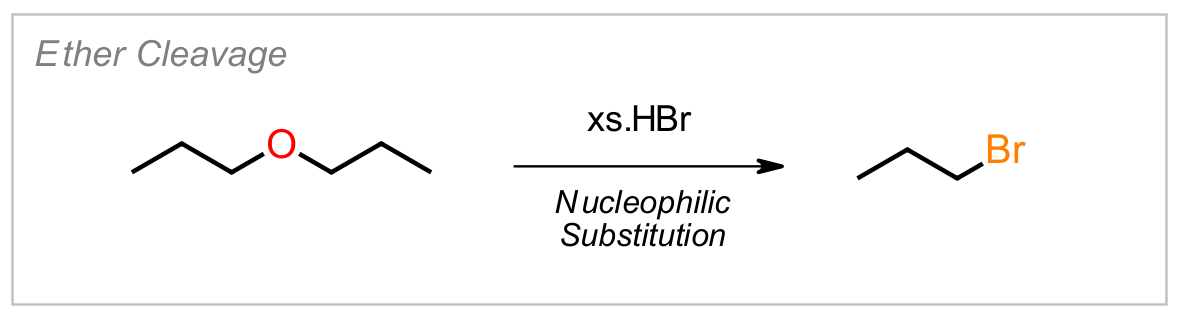
Acidic Ether Cleavage
HX cleaves an ether into two fragments.
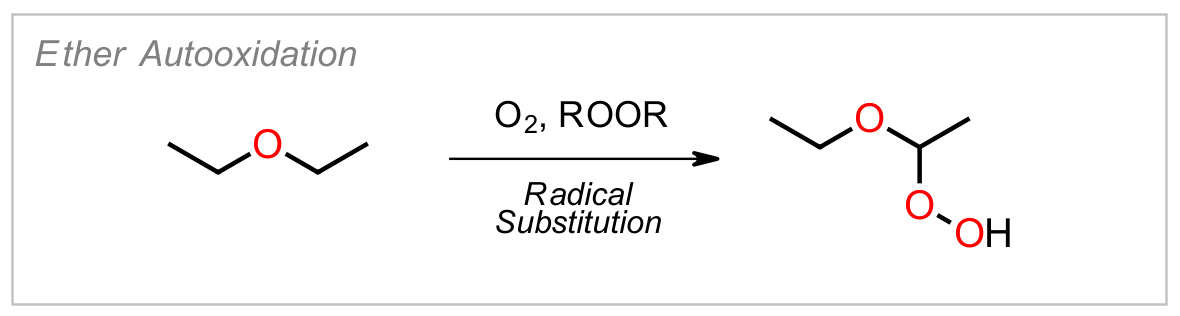
Ether Autooxidation
Ethers form explosive peroxides on standing in air.
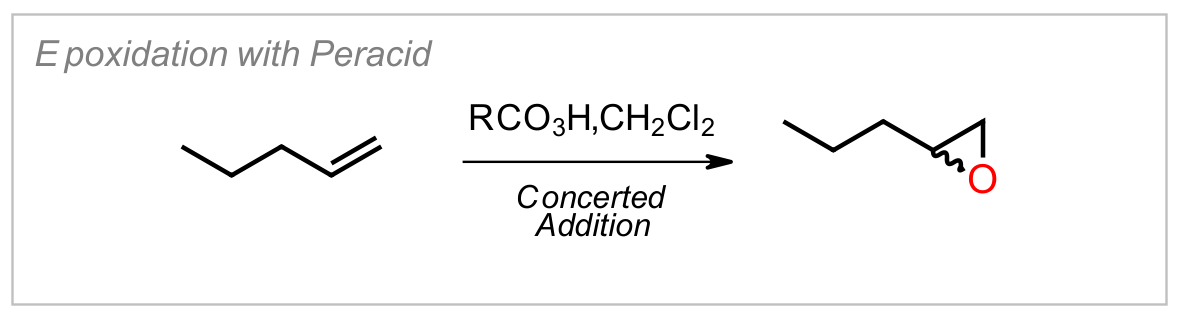
Alkene Epoxidation
A peroxyacid delivers an oxygen to make an epoxide.
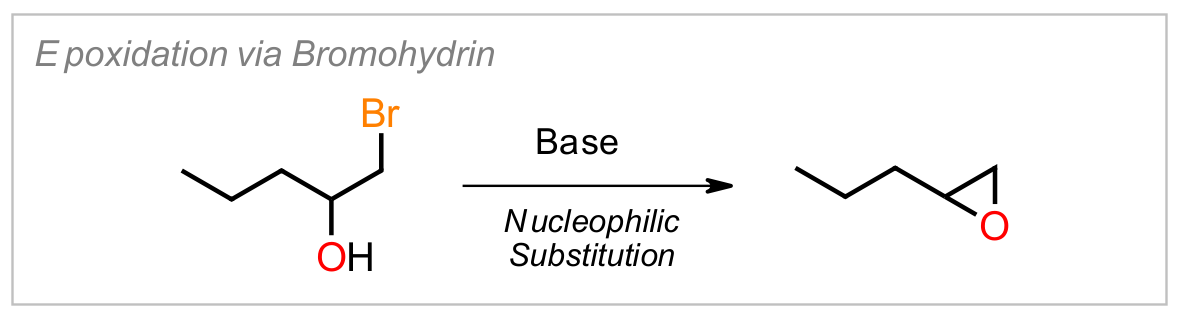
Bromohydrin to Epoxide
Base closes a halohydrin into an epoxide.
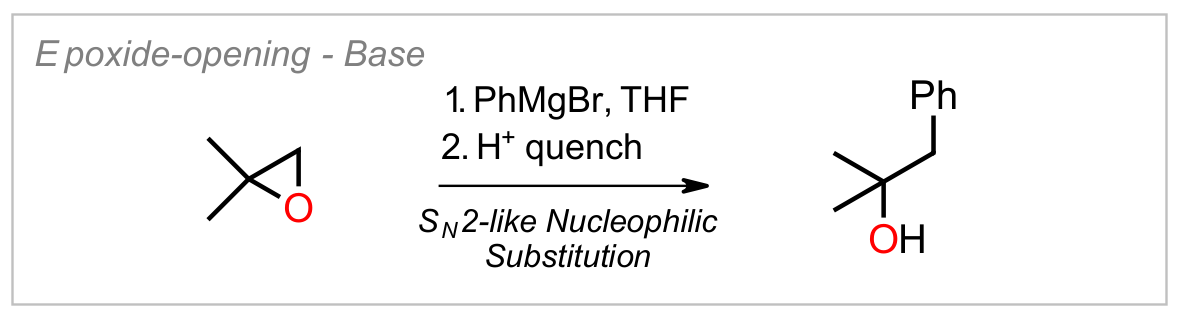
Epoxide Opening (Base)
Nucleophile attacks the less hindered carbon.
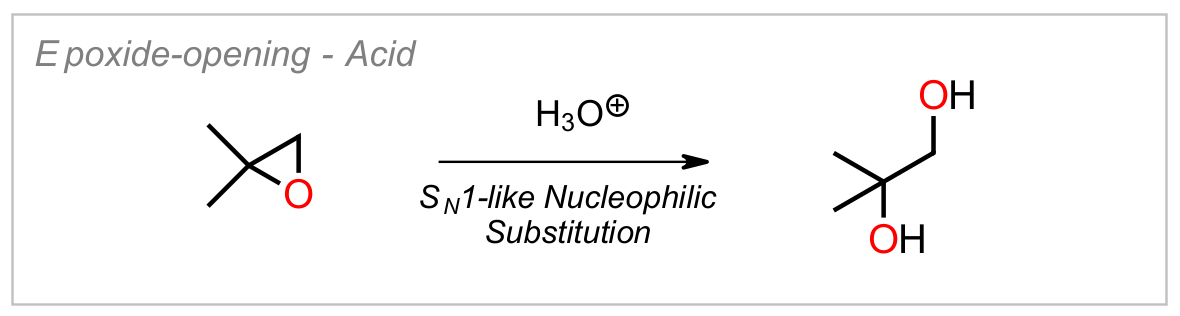
Epoxide Opening (Acid)
Nucleophile attacks the more substituted carbon.
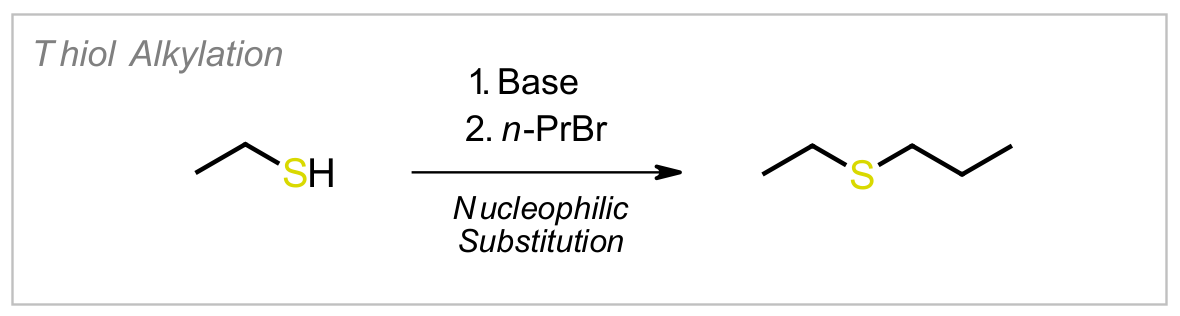
Thiol Alkylation
A thiolate displaces a leaving group.
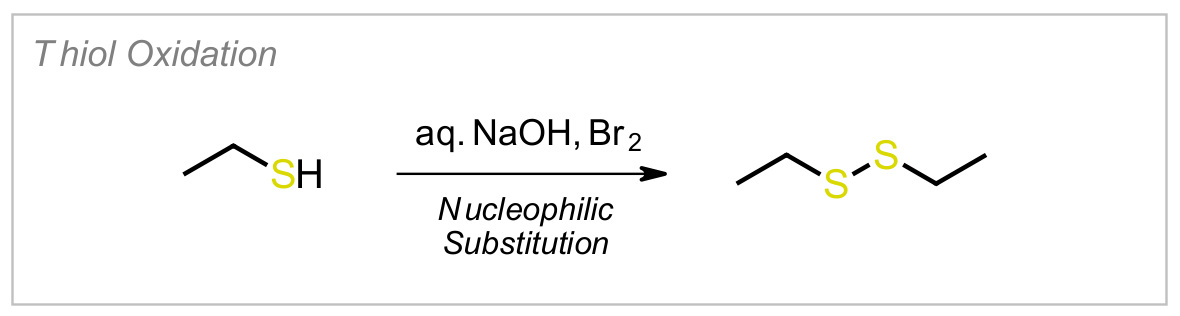
Thiol Oxidation
Two thiols oxidize to a disulfide.
Extended Pi Systems
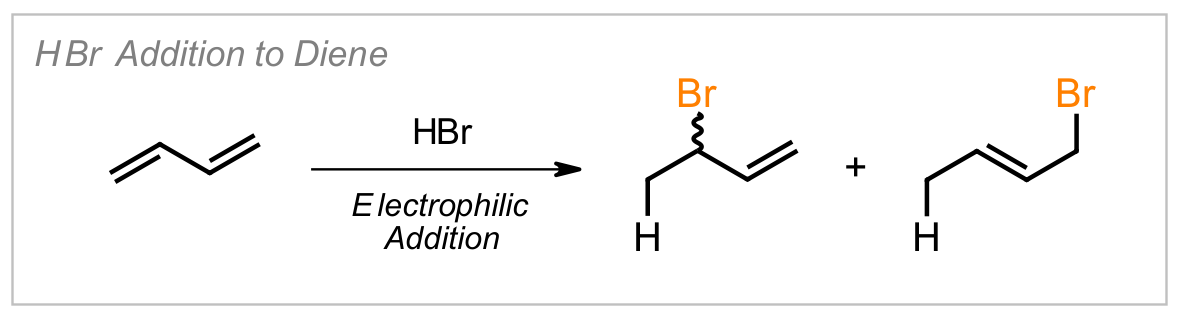
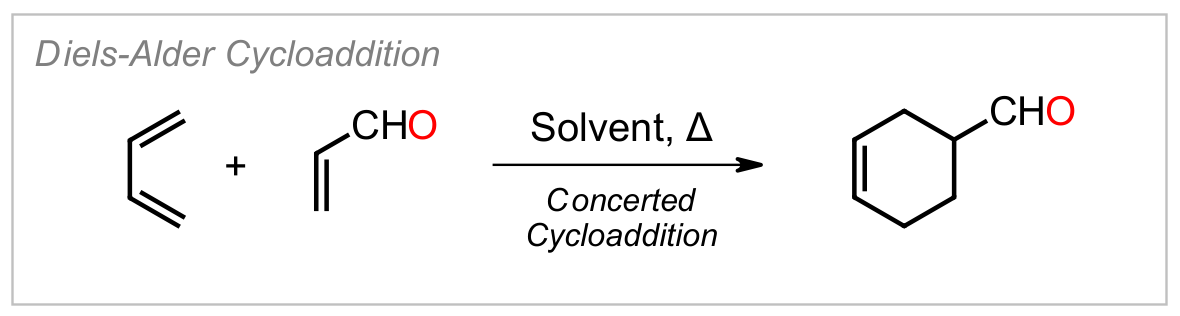
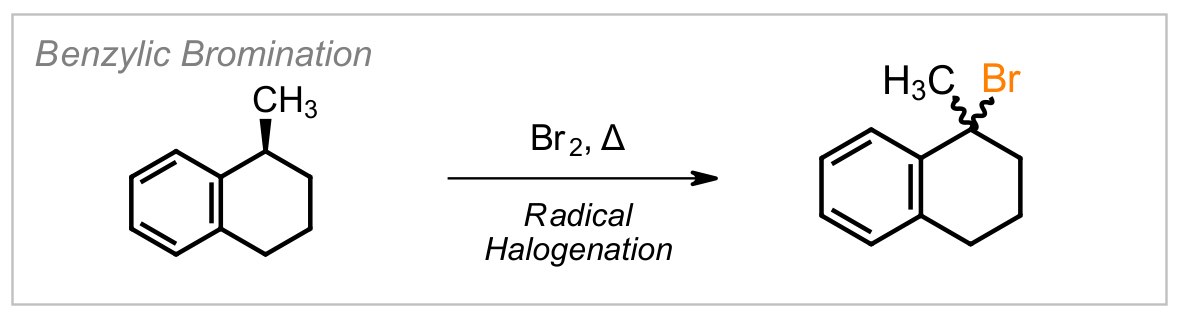
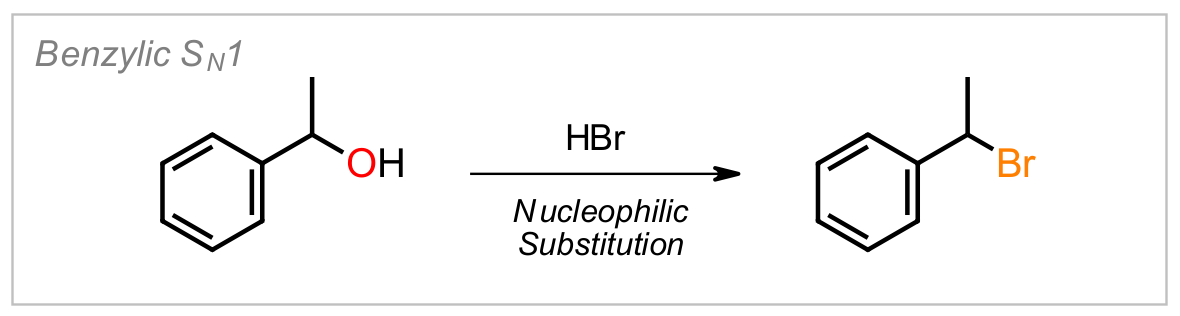
Aromaticity & Benzylic
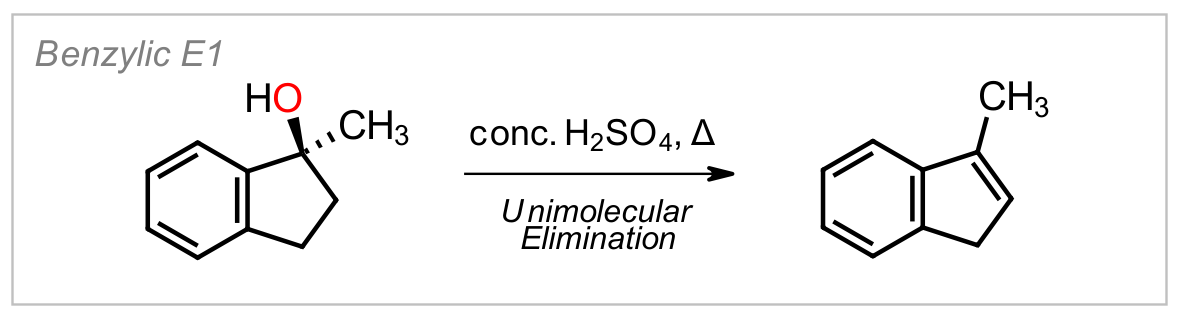
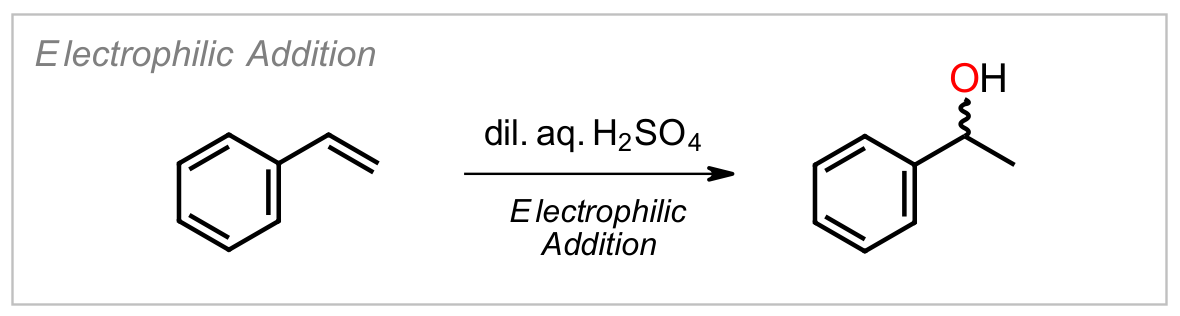
Aromatic Substitutions
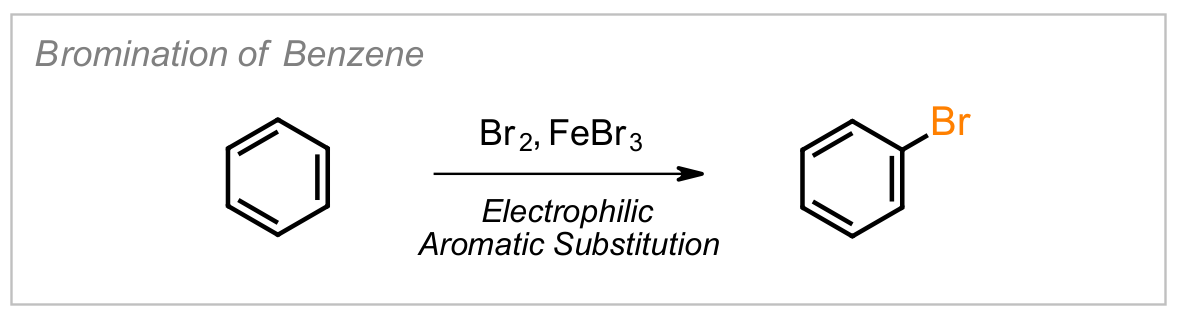
Benzene Bromination
Electrophilic aromatic bromination of benzene.
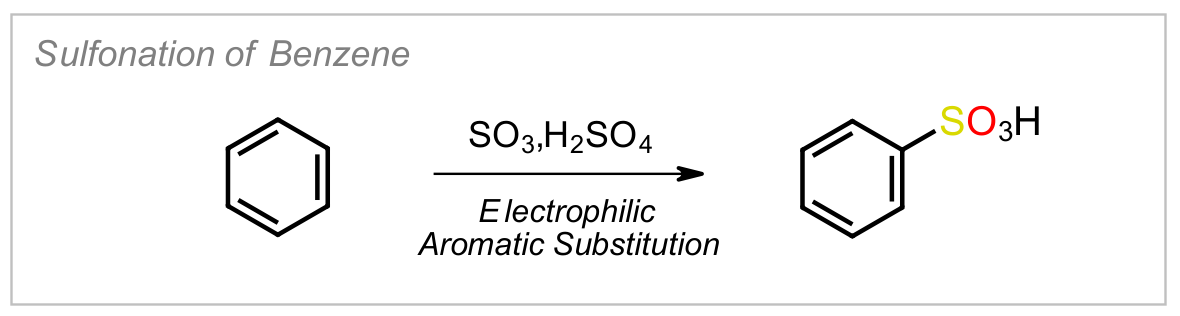
Benzene Sulfonation
A reversible SO3 substitution onto the ring.
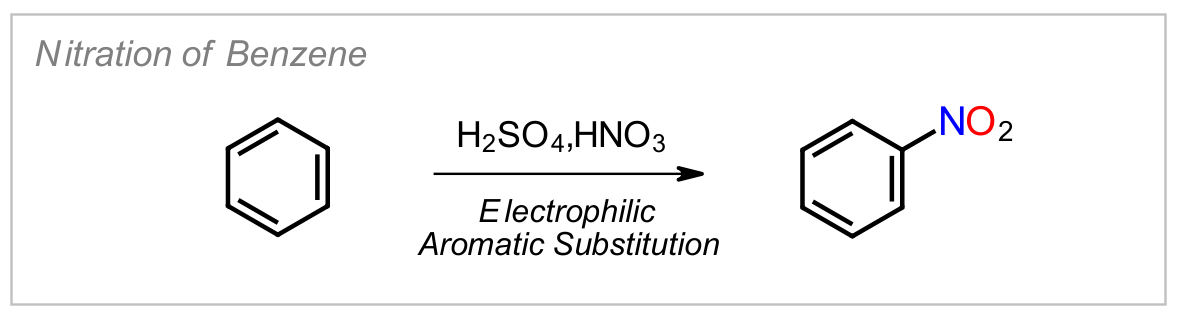
Benzene Nitration
The nitronium ion substitutes onto benzene.
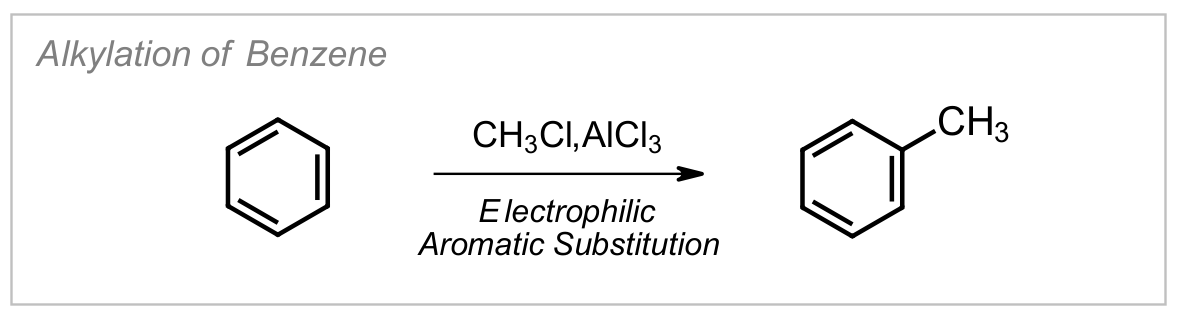
Friedel–Crafts Alkylation
A carbocation alkylates the aromatic ring.
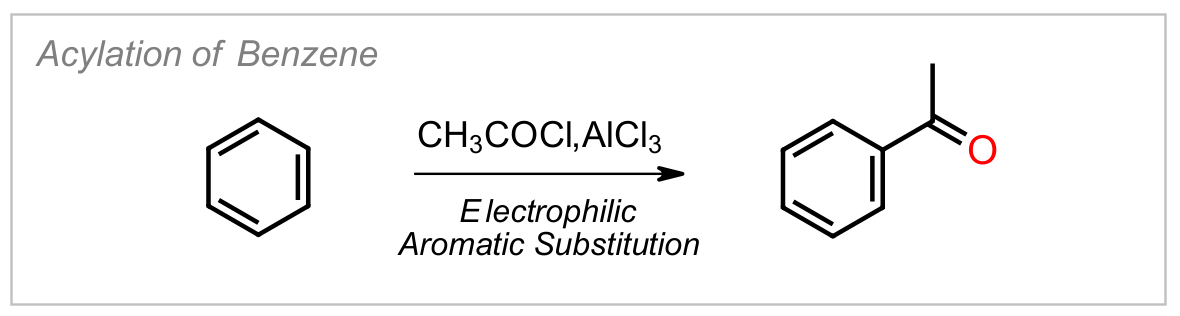
Friedel–Crafts Acylation
An acylium ion installs a ketone group.
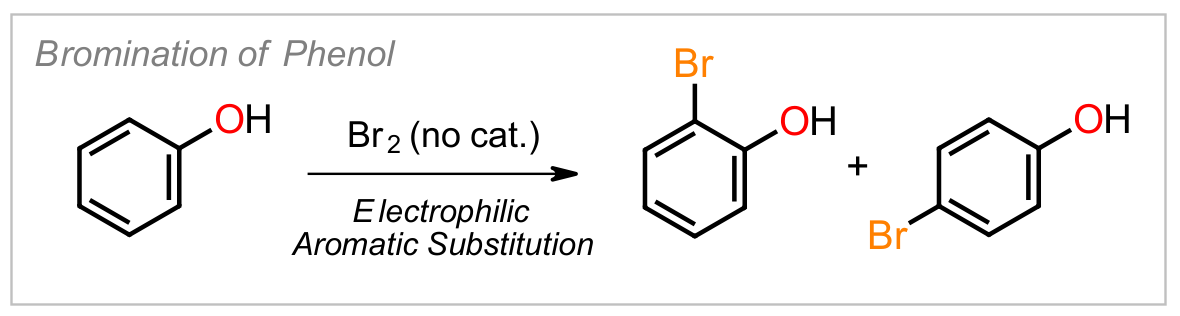
Phenol Bromination
The activated ring brominates readily.
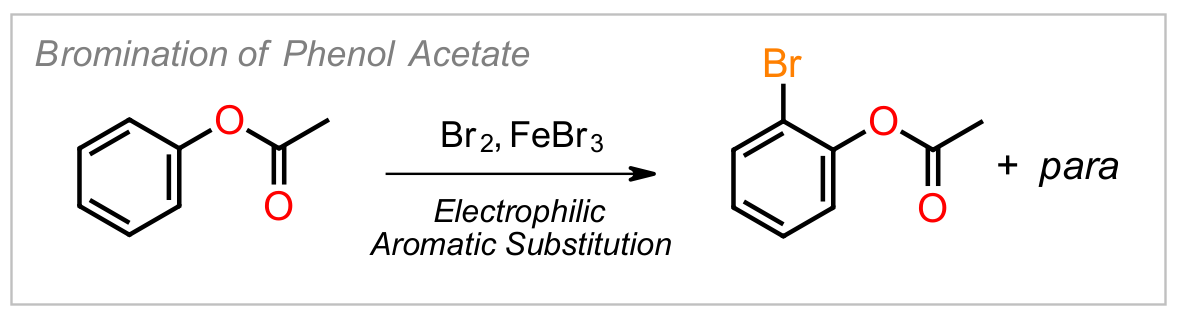
Phenol Acetate Bromination
A protected phenol directs the bromination.
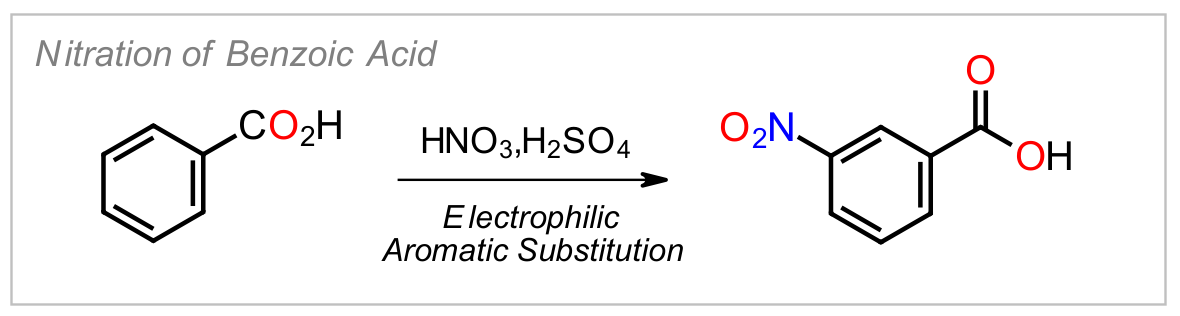
Benzoic Acid Nitration
The meta-directing carboxyl controls the site.
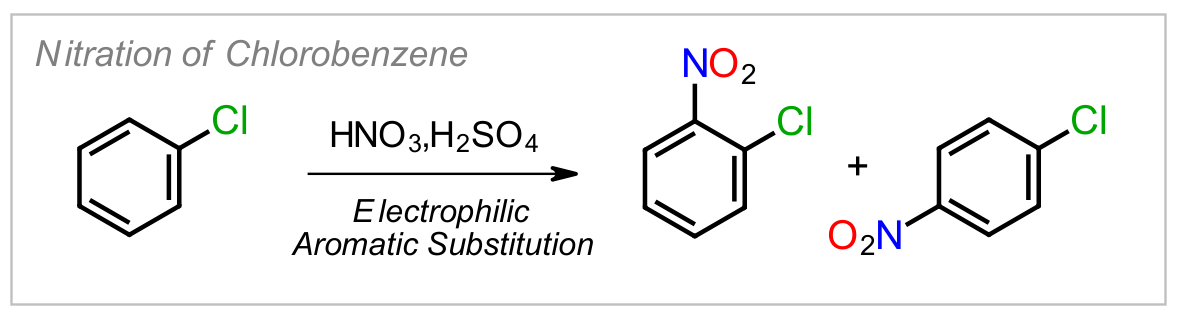
Chlorobenzene Nitration
Chlorine directs the electrophile ortho and para.
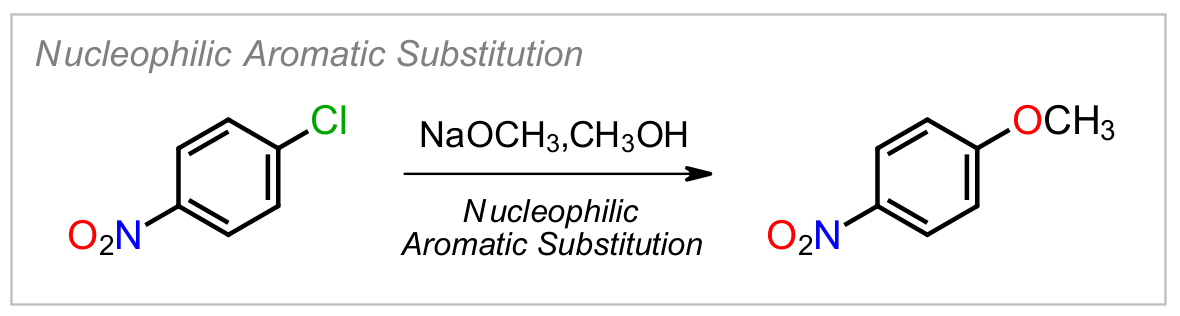
Nucleophilic Aromatic Substitution
Addition–elimination through a Meisenheimer complex.
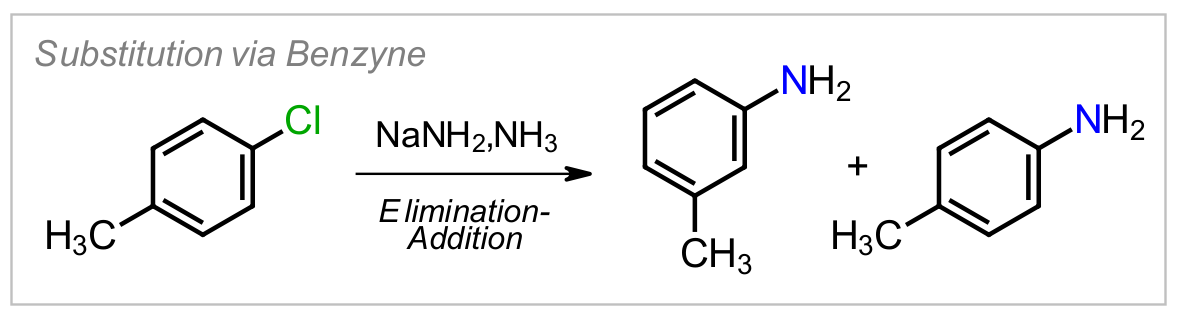
Benzyne Formation
Strong base eliminates to a strained benzyne.
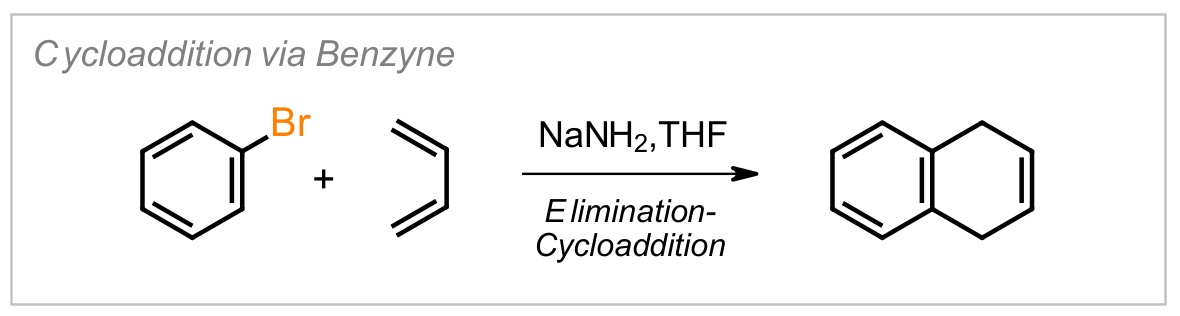
Benzyne Diels–Alder
Benzyne is trapped by a diene in a cycloaddition.
Aldehydes & Ketones
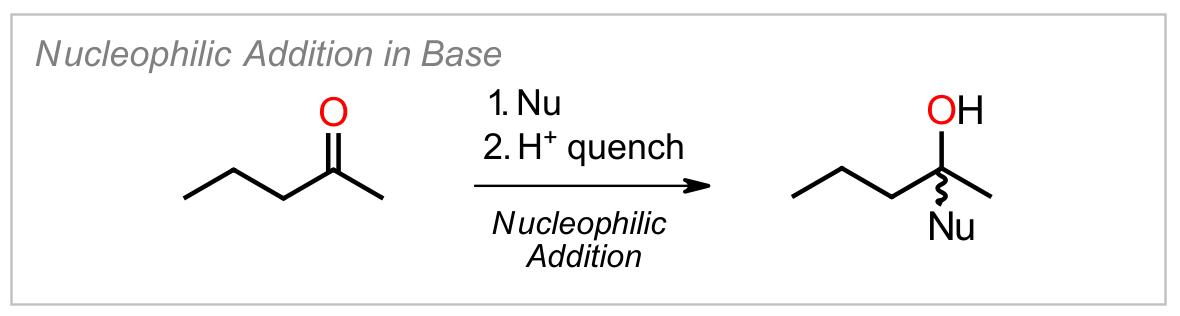
Nucleophilic Addition (Base)
A nucleophile adds directly to the carbonyl.
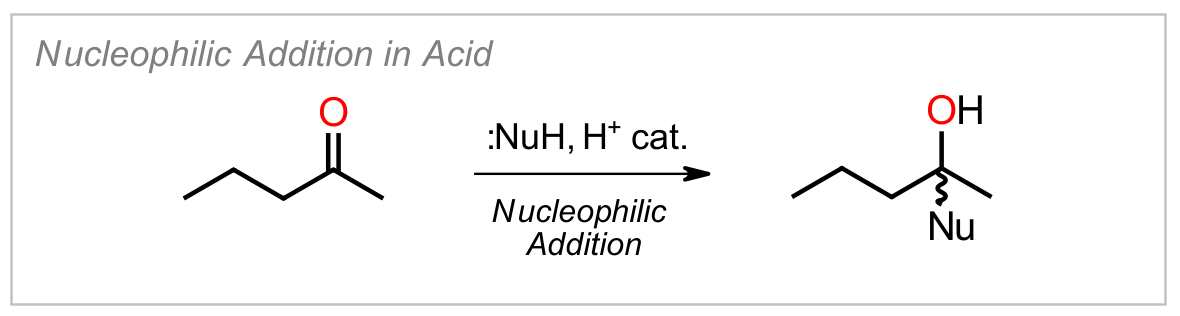
Nucleophilic Addition (Acid)
A protonated carbonyl is attacked by a nucleophile.
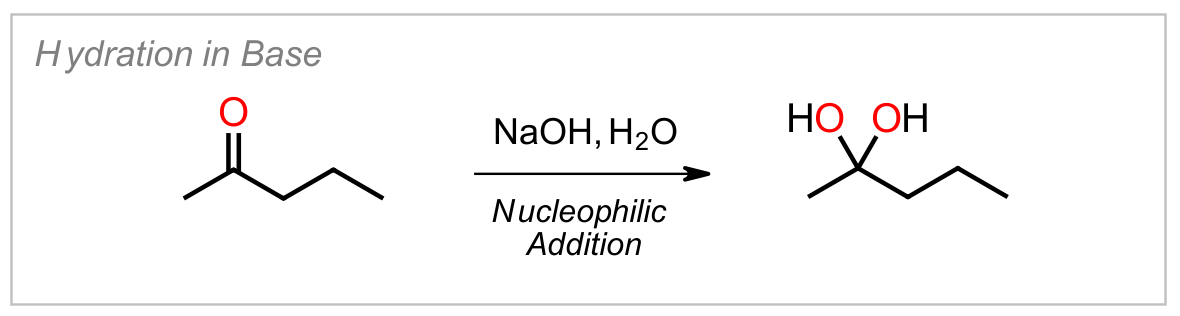
Hydrate Formation (Base)
Water adds under base to form a gem-diol.
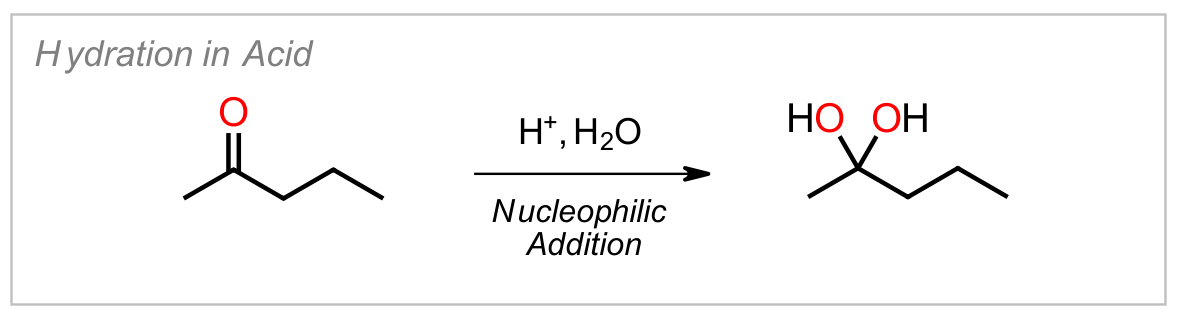
Hydrate Formation (Acid)
Water adds under acid to form a gem-diol.
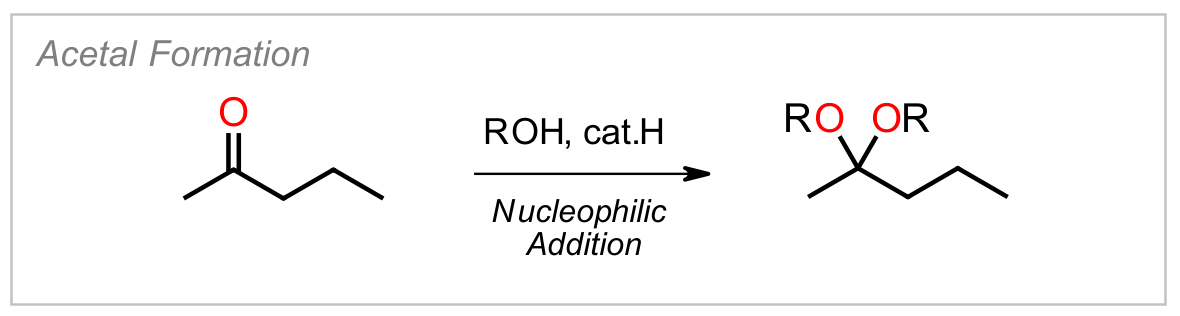
Acetal Formation
An aldehyde plus two alcohols gives an acetal.
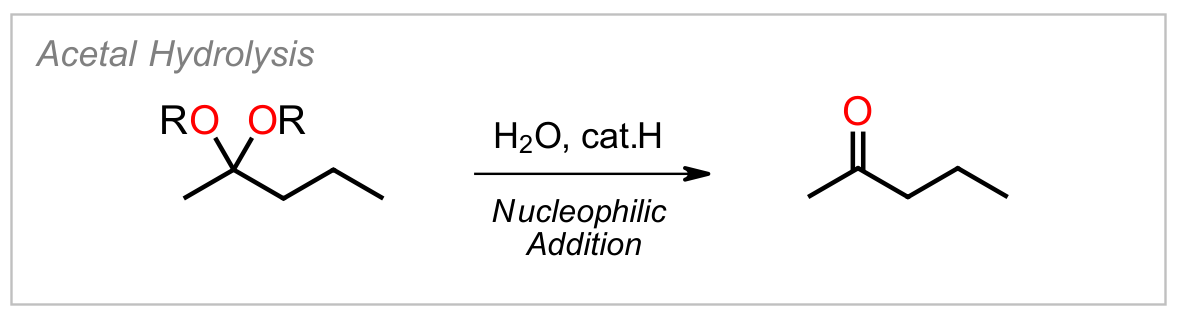
Acetal Hydrolysis
Aqueous acid reverts an acetal to the carbonyl.
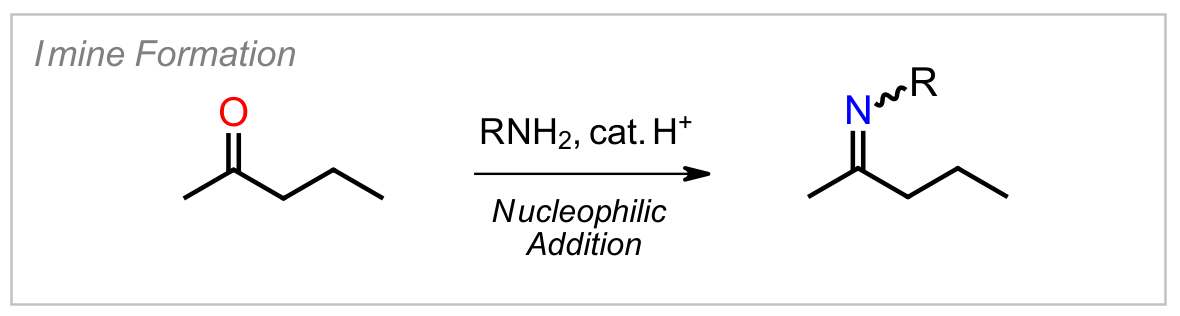
Imine Formation
A primary amine condenses to an imine.
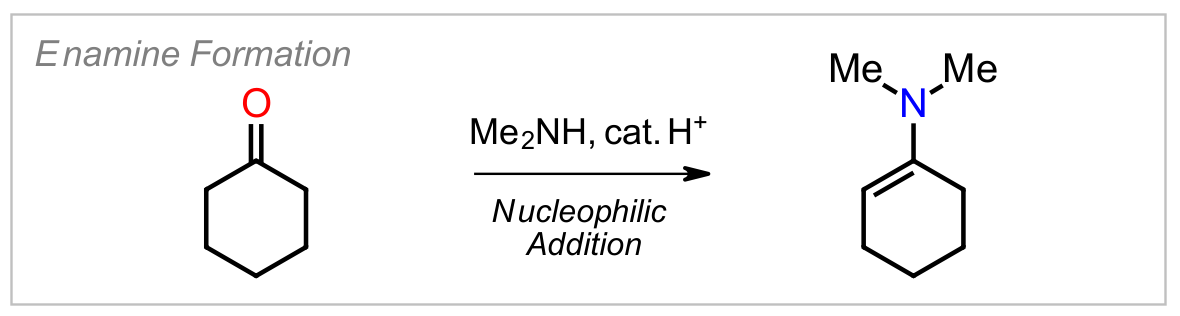
Enamine Formation
A secondary amine condenses to an enamine.
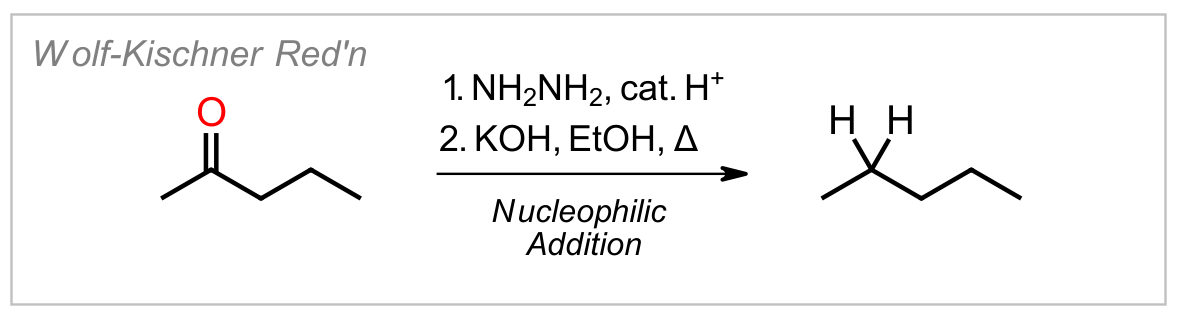
Wolff–Kishner Reduction
A hydrazone reduces the carbonyl to CH2.
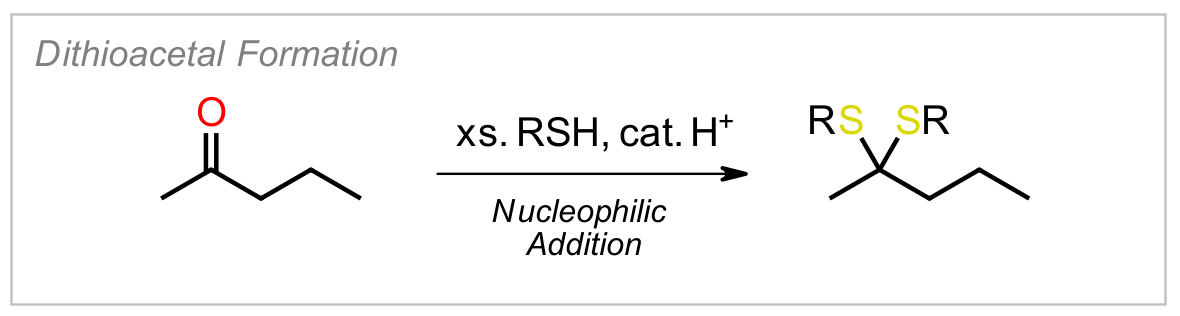
Dithioacetal Formation
Two thiols convert the carbonyl to a dithiane.
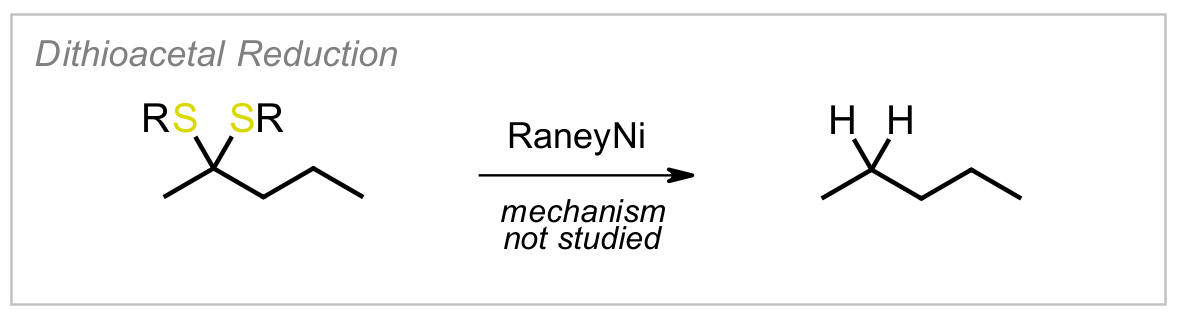
Dithioacetal Reduction
Raney nickel desulfurizes the dithiane to CH2.
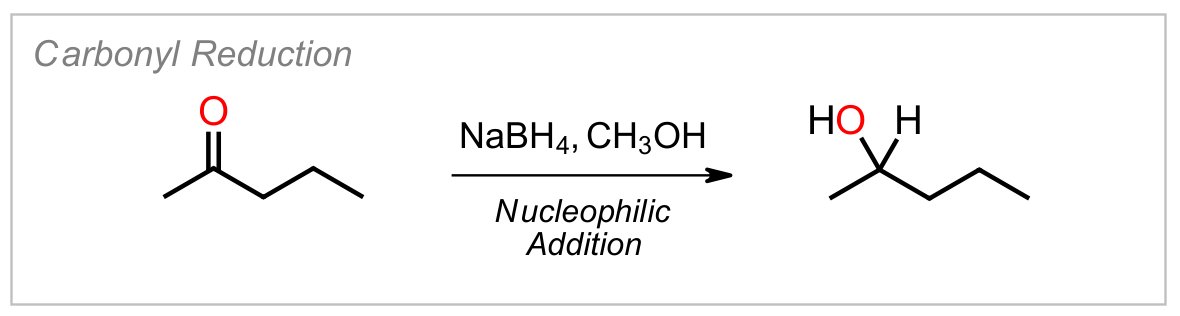
Hydride Additions
NaBH4 or LAH reduce the carbonyl to an alcohol.
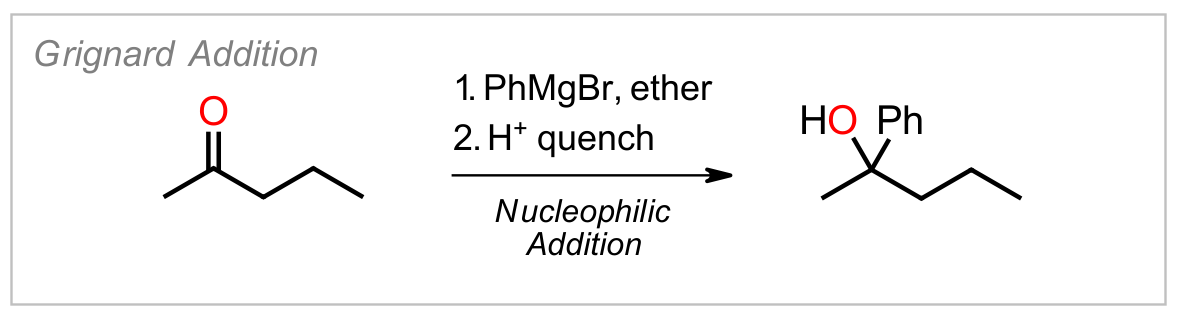
Grignard + Ketone
A Grignard reagent gives a tertiary alcohol.
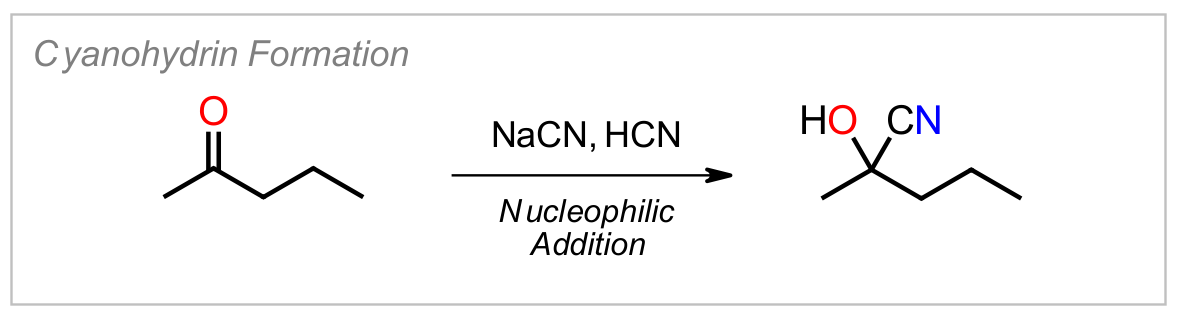
Cyanohydrin Formation
HCN adds to give a cyanohydrin.
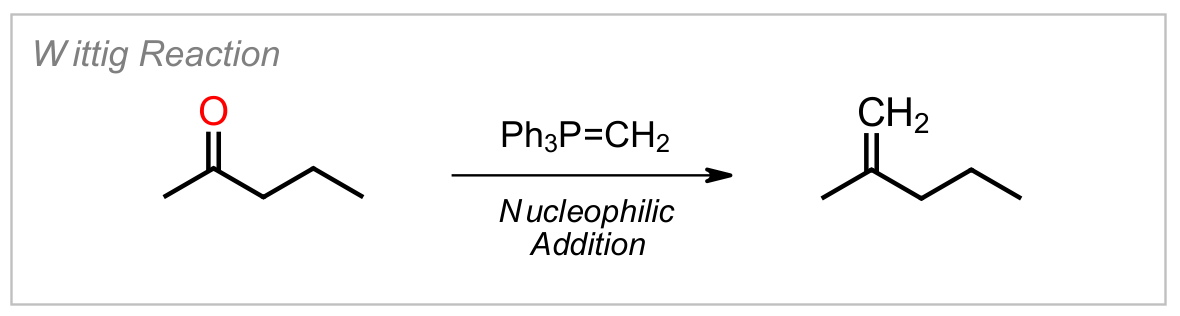
Wittig Olefination
An ylide converts the carbonyl into an alkene.
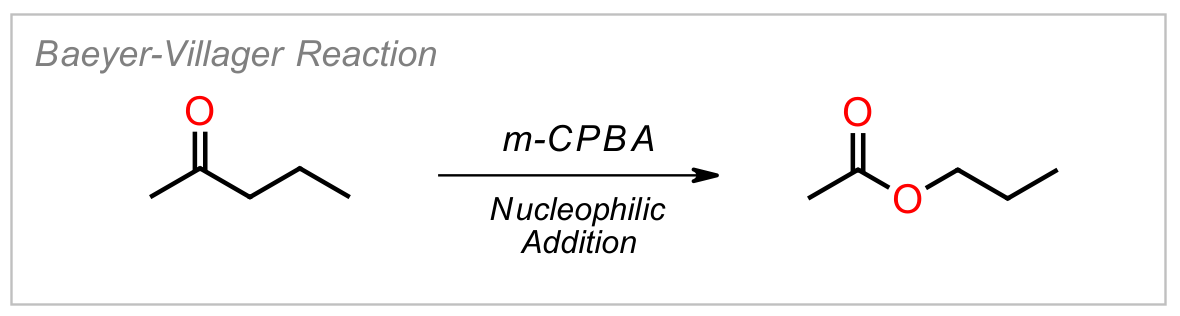
Baeyer–Villiger Oxidation
A peroxyacid inserts oxygen to form an ester.
Carboxylic Acids & Derivatives
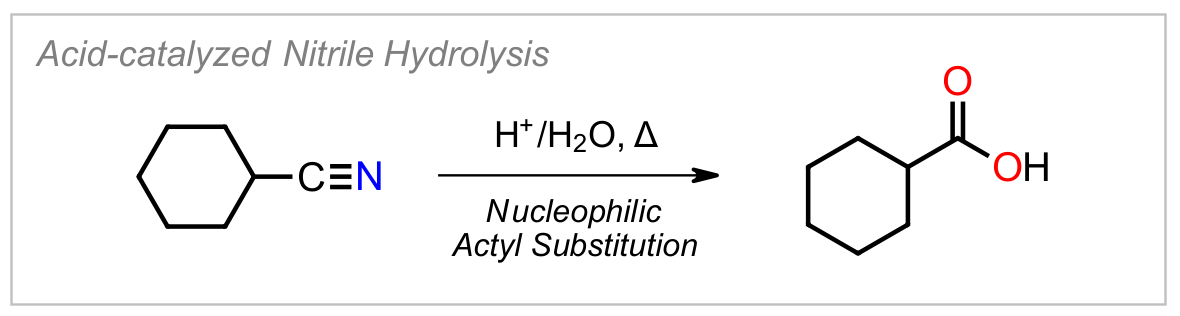
Nitrile Hydrolysis (Acid)
A nitrile hydrolyzes to a carboxylic acid.
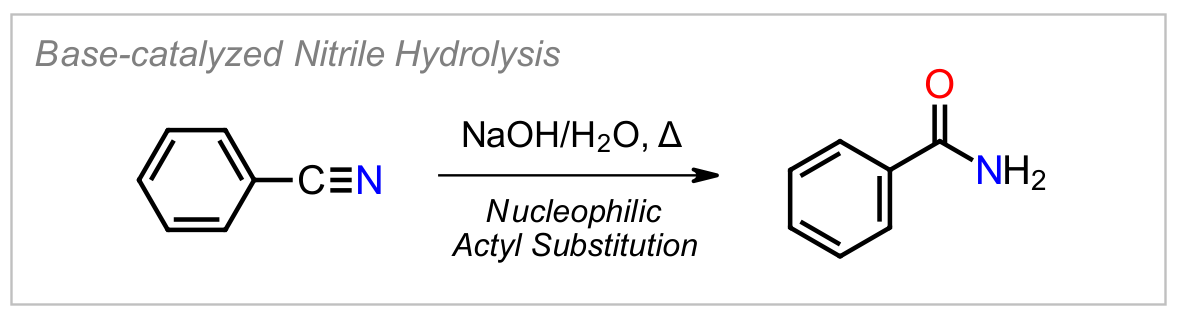
Nitrile Hydrolysis (Base)
Base hydrolyzes a nitrile to a carboxylate.
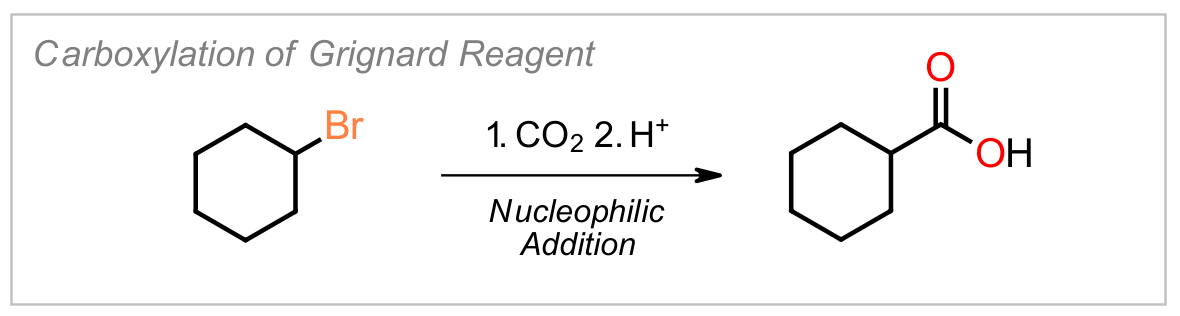
Grignard Carboxylation
A Grignard reagent plus CO2 gives a carboxylic acid.
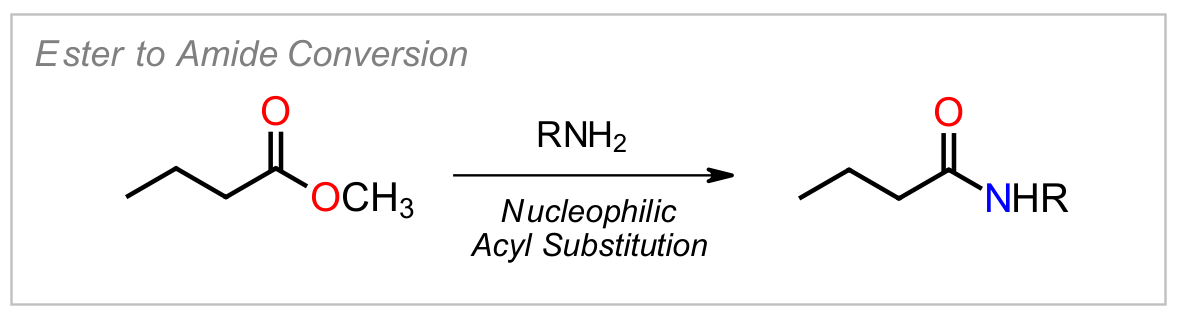
Ester to Amide
An amine converts an ester into an amide.
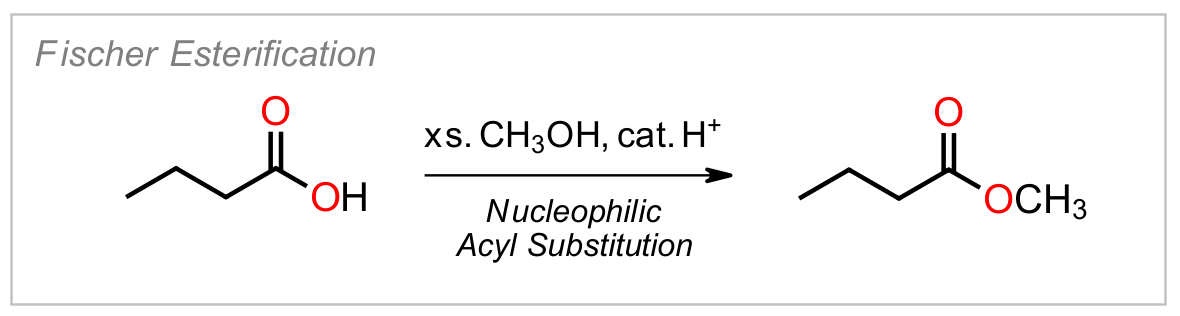
Fischer Esterification
Acid and alcohol form an ester reversibly.
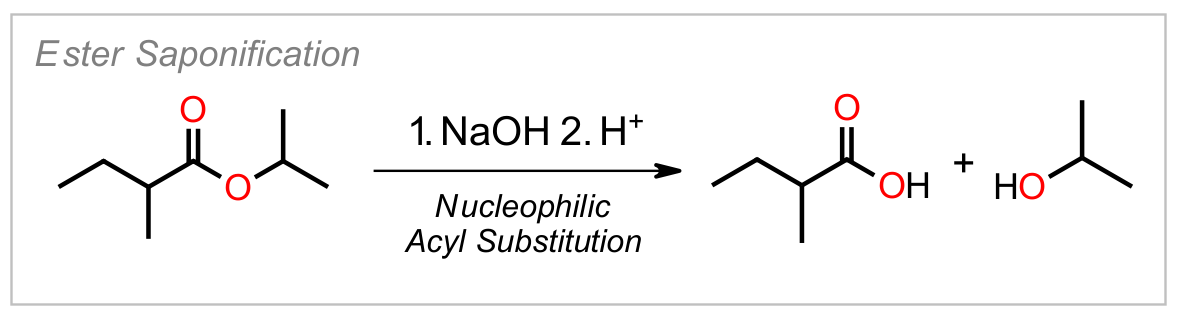
Saponification
Base hydrolyzes an ester to a carboxylate.
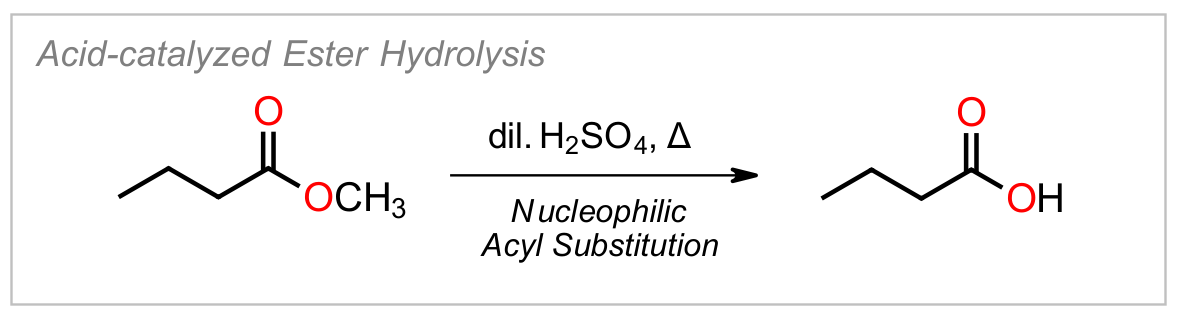
Ester Hydrolysis (Acid)
Acid hydrolyzes an ester to acid plus alcohol.
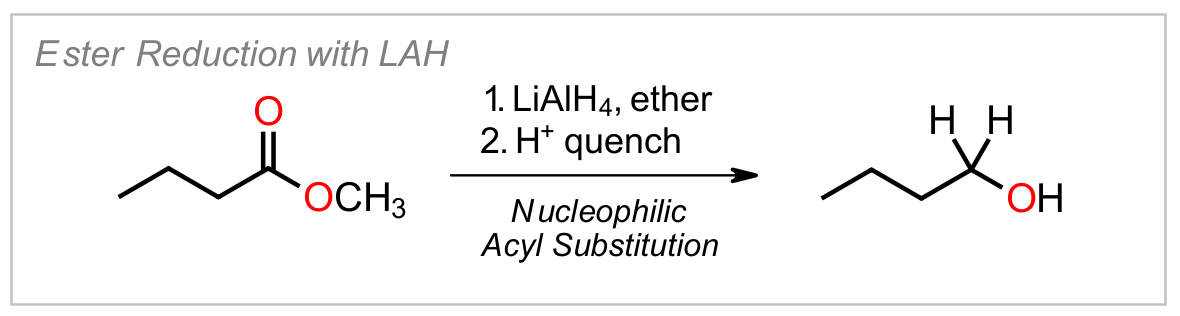
Ester Reduction (LAH)
LiAlH4 reduces an ester to a primary alcohol.
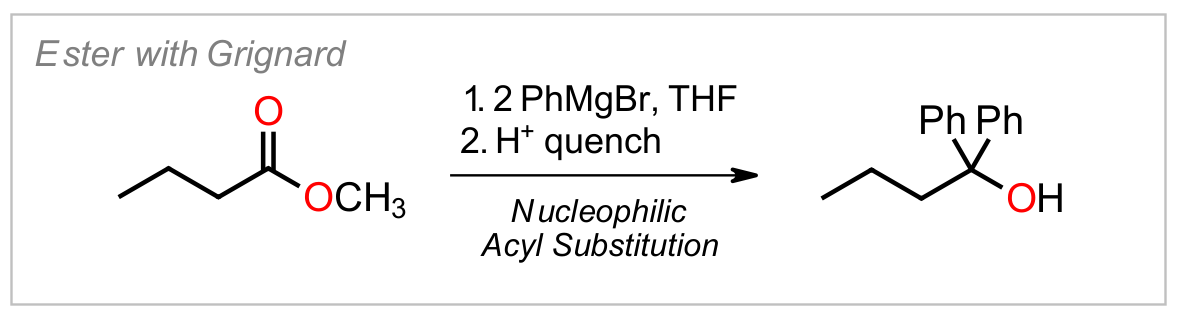
Ester + Grignard
Two equivalents of Grignard give a tertiary alcohol.
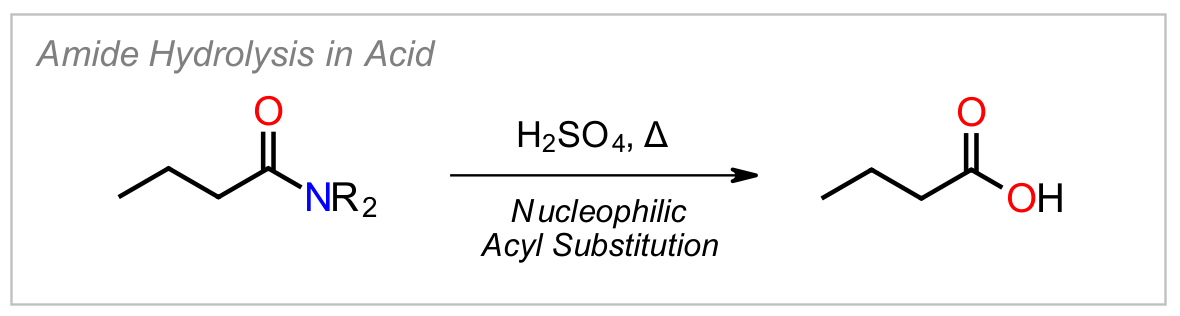
Amide Hydrolysis (Acid)
Acid hydrolyzes an amide to a carboxylic acid.
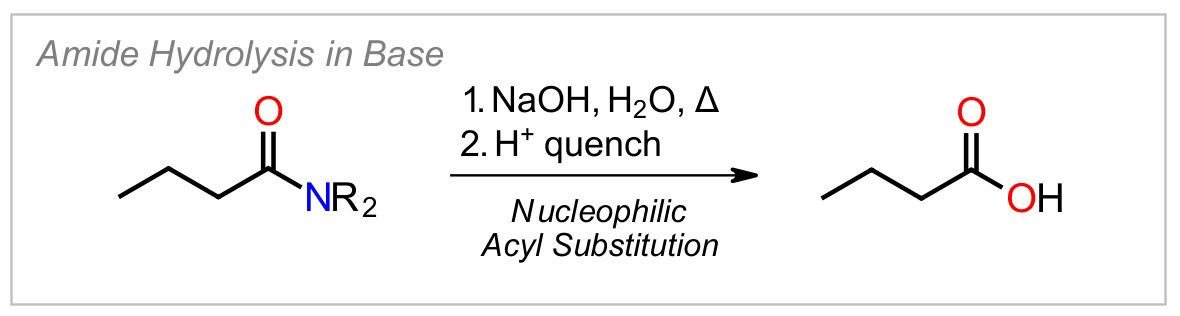
Amide Hydrolysis (Base)
Base hydrolyzes an amide to a carboxylate.
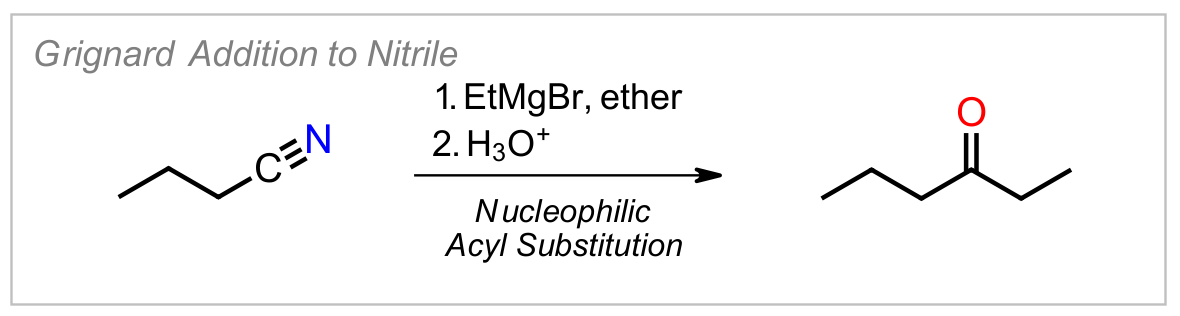
Grignard + Nitrile
A Grignard adds to a nitrile to form a ketone.
Alpha-Carbon Reactions
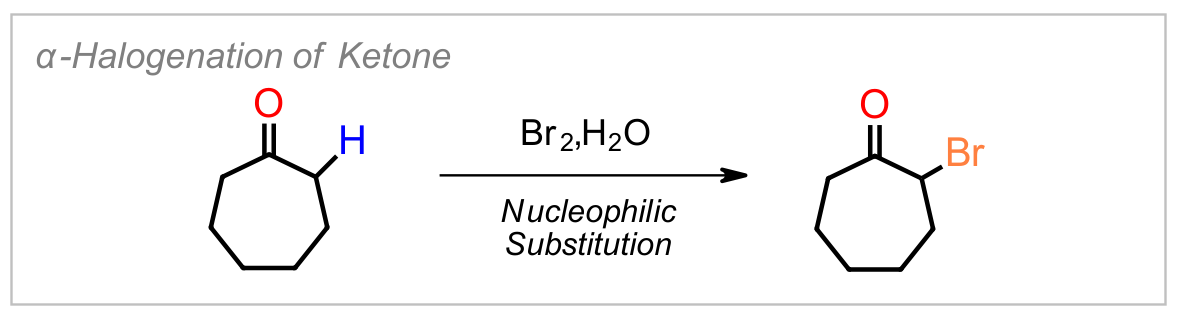
Alpha Bromination
Acid-catalyzed halogenation at the alpha carbon.
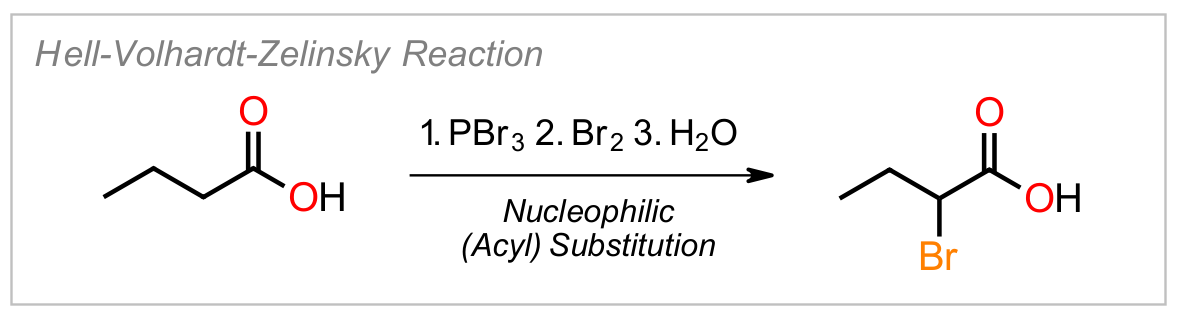
Hell–Volhard–Zelinsky
Alpha-bromination of a carboxylic acid.
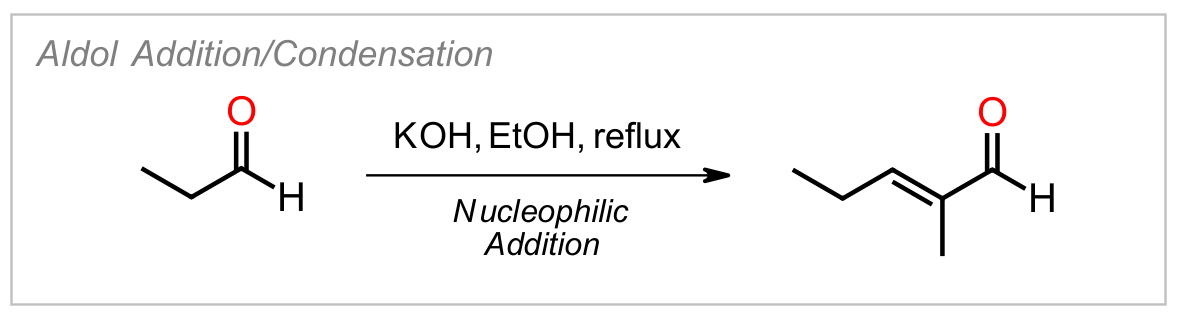
Aldol Condensation
An enolate adds then dehydrates to an enone.
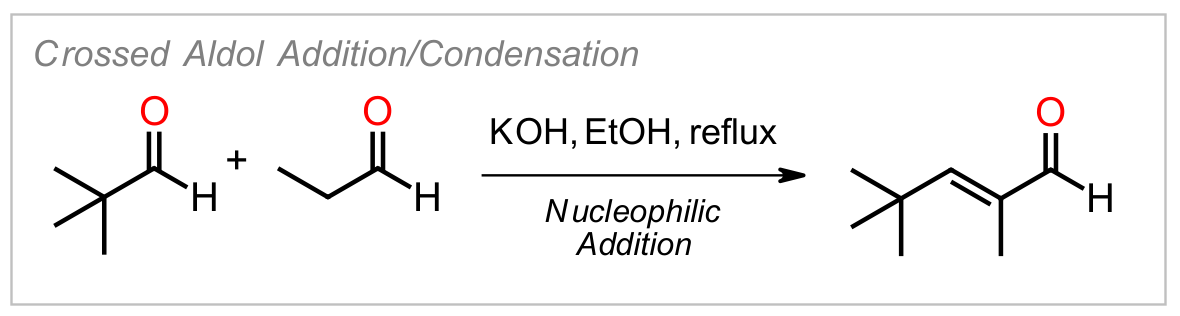
Crossed Aldol
An aldol between two different carbonyls.
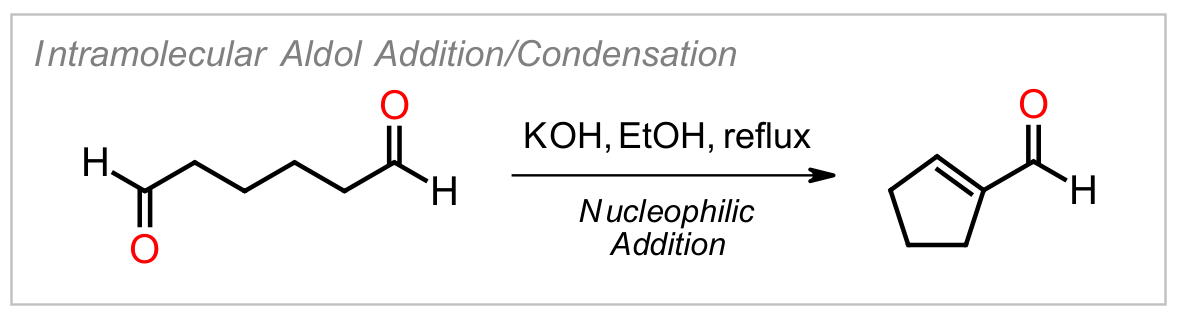
Intramolecular Aldol
A ring-forming aldol condensation.
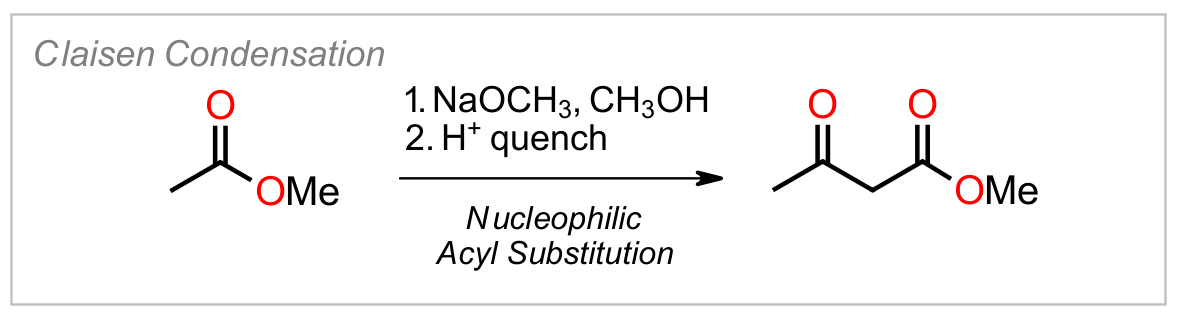
Claisen Condensation
Two esters give a beta-keto ester.
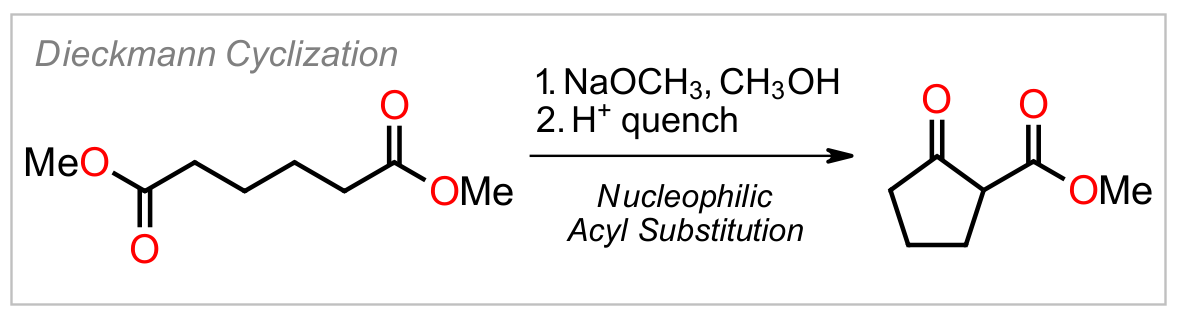
Dieckmann Cyclization
An intramolecular Claisen forms a ring.
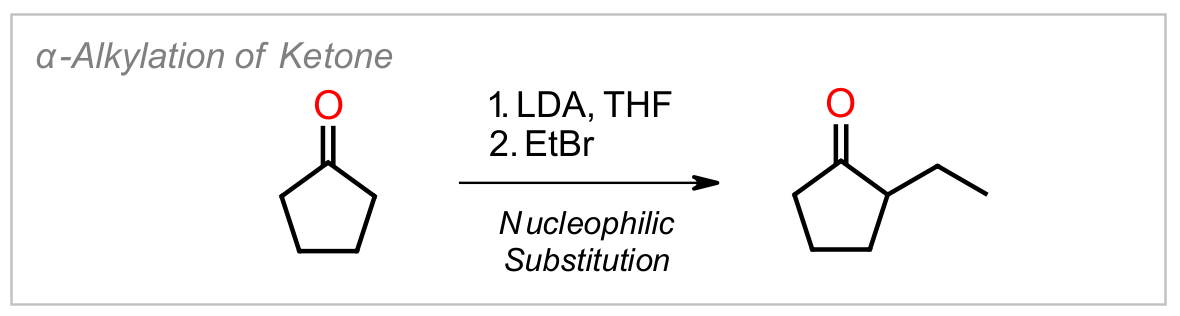
Alpha Alkylation
An enolate is alkylated by an alkyl halide.
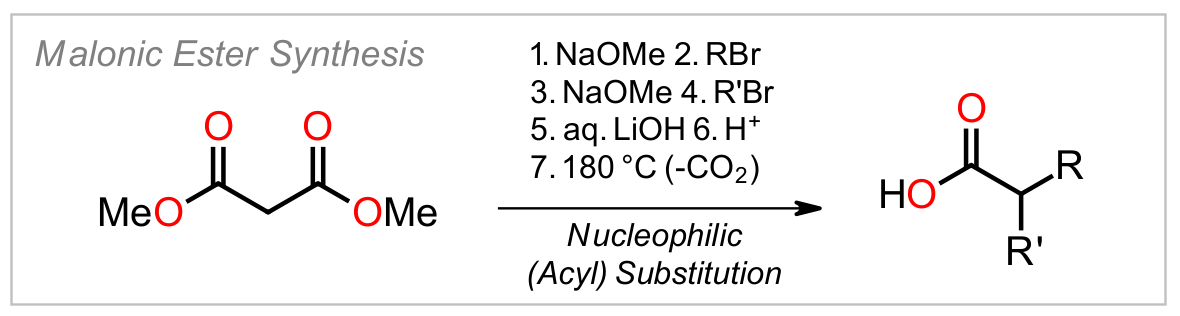
Malonic Ester Synthesis
Builds substituted acetic acids.
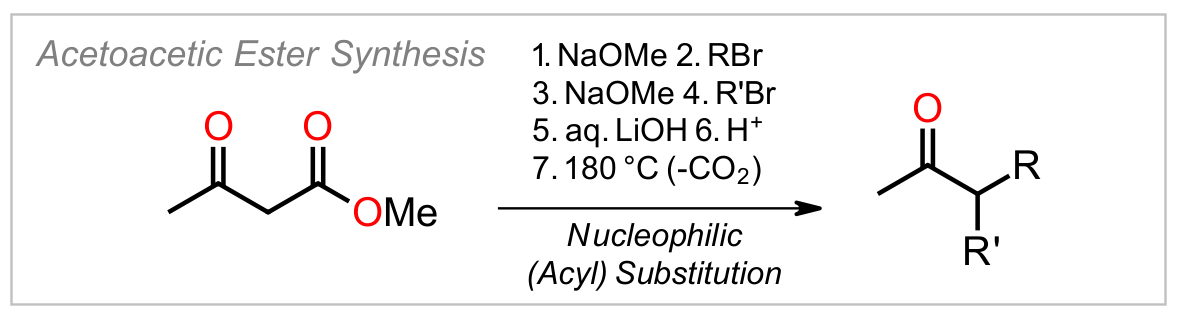
Acetoacetic Ester Synthesis
Builds substituted methyl ketones.
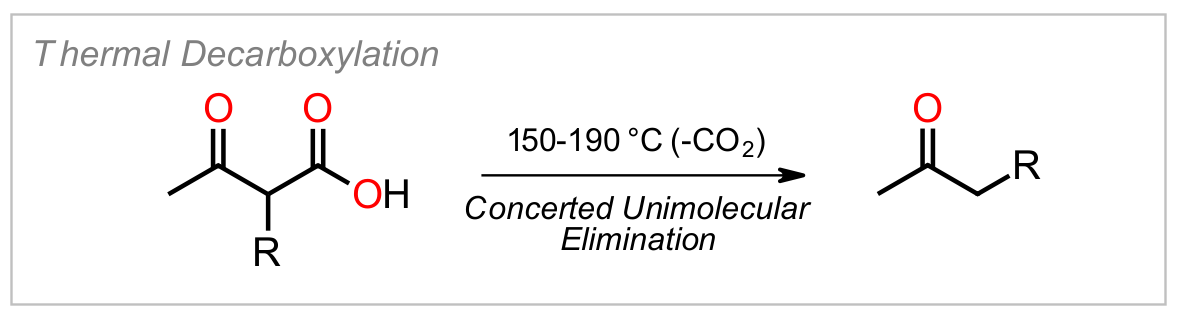
Decarboxylation
A beta-keto acid loses CO2 on heating.
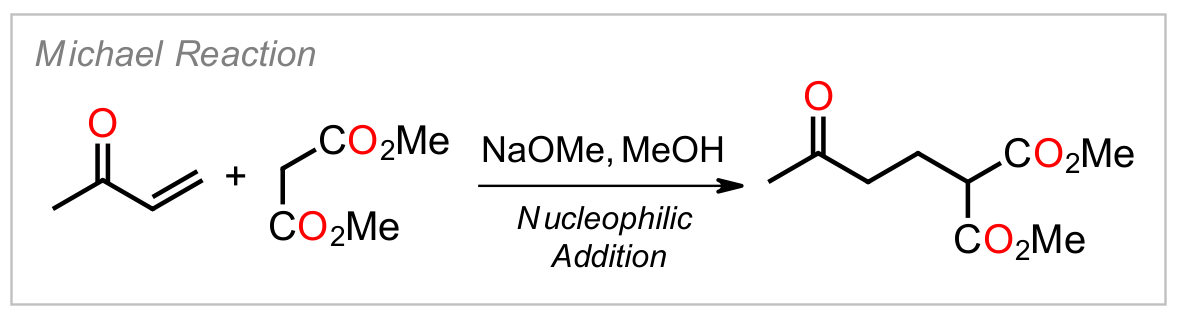
Michael Addition
Conjugate addition to an enone.
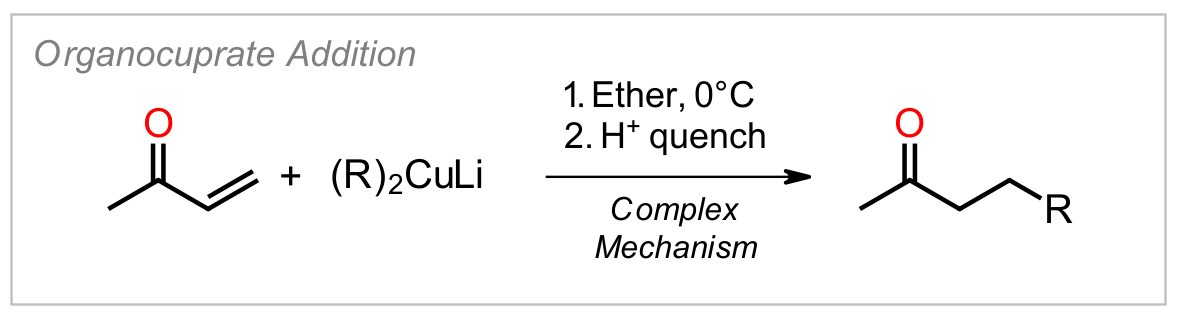
Organocuprate Addition
1,4-addition of a cuprate to an enone.
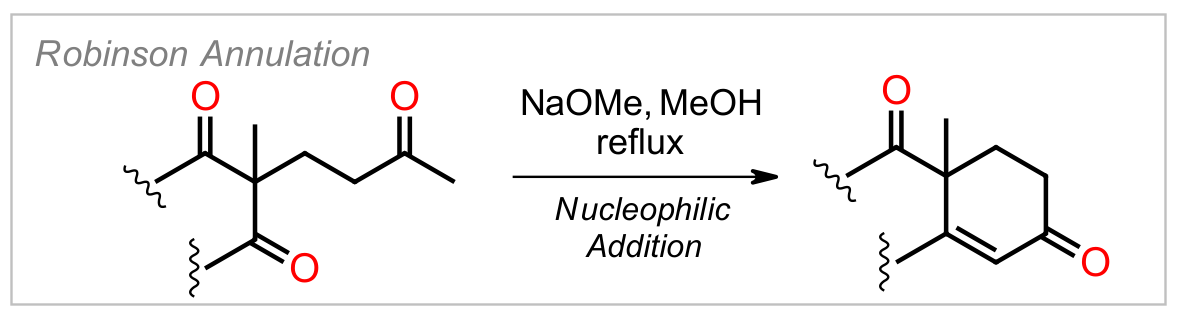
Robinson Annulation
A Michael then aldol builds a new ring.